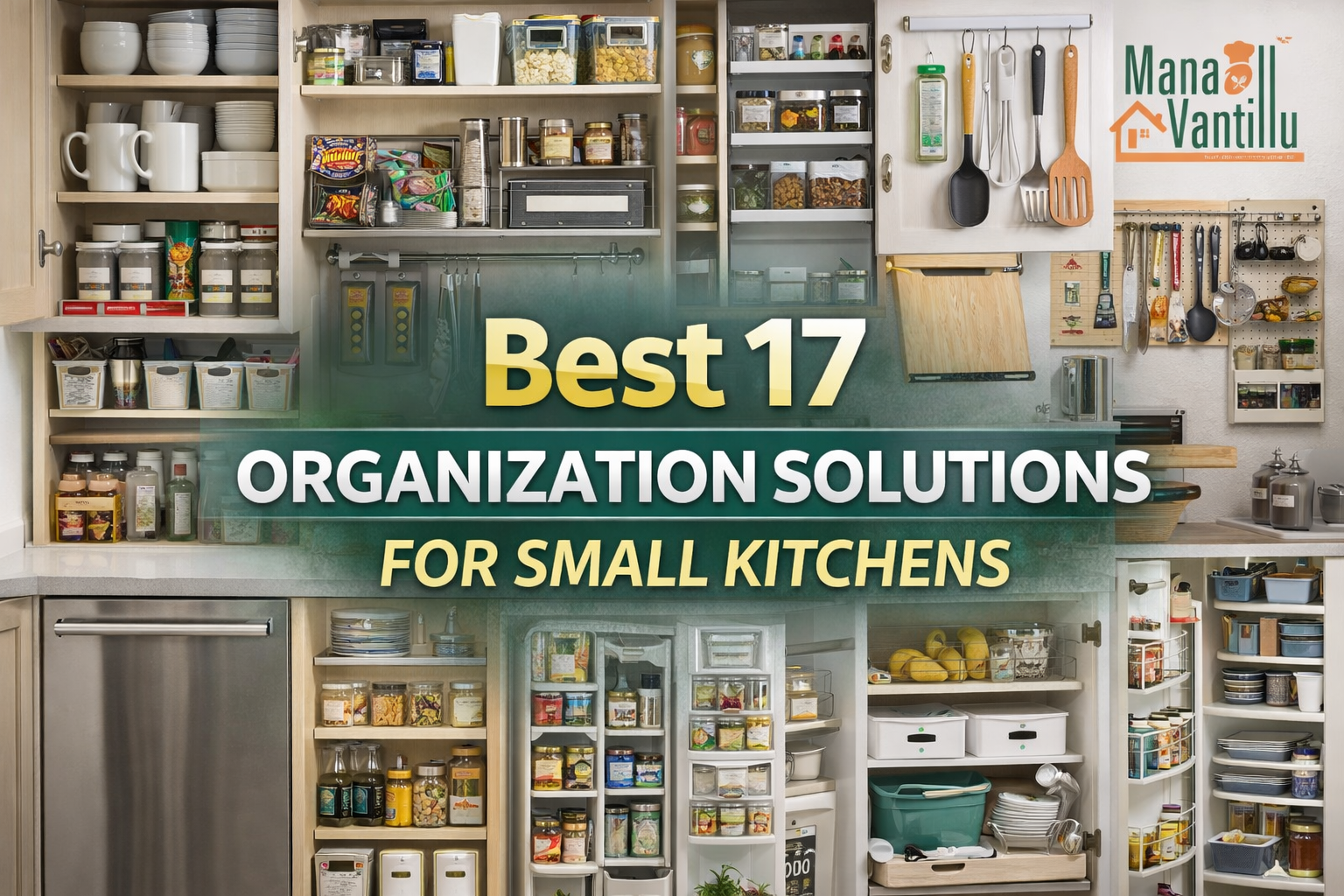
Having a small kitchen isn’t a design flaw; it’s an invitation to create a brilliantly efficient workspace. A compact layout naturally forms a tighter “work triangle,” saving you steps between the stove, sink, and fridge. When correctly optimized, it means less daily stress, faster meal prep, safer food storage, and less food waste. Below are the Best 17 Organization Solutions for Small Kitchens to help you reclaim your space and your sanity.
- Vertical shelf risers: Double your cabinet space by stacking upwards.
- Pull-out pantry shelves: Transform narrow gaps into sliding storage.
- Magnetic knife strips: Clear drawers and keep blades safely accessible.
- Under-shelf baskets: Utilize dead air space for snacks and wraps.
- Corner lazy Susans: Make blind cabinet corners fully reachable.
- Over-the-sink boards: Instantly add prep space right where you wash.
- Fold-down wall tables: Install a pop-up prep station that drops flat.
- Drawer dividers: Stop rummaging with modular, visible utensil trays.
- Clear stackable containers: See inventory instantly and maintain freshness.
- Hanging pot racks: Free up base cabinets by suspending bulky pans.
- Pegboard walls: Build a customizable, vertical chef’s tool wall.
- Appliance garages: Hide clunky appliances while keeping them plugged in.
- Slim recycling bins: Tuck waste away to improve floor space and hygiene.
- Door-mounted organizers: Use the back of cabinet doors for spices.
- FIFO labeling systems: Rotate food properly to eliminate spoilage.
- Tiered under-sink trays: Navigate plumbing with sliding, modular bins.
- Foldable & nesting tools: Swap rigid strainers for collapsible silicone.
Solution 1: Vertical Shelf Risers & Adjustable Inserts
What it is & why it helps: Cabinets often suffer from vertical “dead air.” Shelf risers act as mini-tables inside your cupboards, instantly doubling capacity. Instead of unstacking a heavy tower of dishes to reach a single plate, risers create distinct, easy-to-grab zones. How to implement:
- Measure the depth and height of your most cluttered cabinet.
- Empty the shelf and group items by height (mugs together, plates together).
- Quick win (0–14 days): Add one freestanding riser to separate dinner plates from smaller salad bowls.
- Scale action (30–90 days): Install adjustable track shelving strips or hire a carpenter to drill new peg holes for customized, permanent shelf heights. Material & buy tips: Opt for solid bamboo or rust-resistant coated steel; avoid cheap plastics that sag under heavy ceramics. KPI: 30% more usable shelf capacity and zero time spent unstacking. Micro-note: Ergonomics: Store heavy plates on lower shelves and lighter glasses higher to protect your lower back.
Solution 2: Pull-Out Pantry Shelves & Slim Roll-Out Racks
What it is & why it helps: The narrow 4-to-6-inch gap between your fridge and the wall is prime real estate. Slim, wheeled racks convert these awkward gaps into full-access pantries, perfect for cans, spices, and oils. How to implement:
- Measure the exact width of your kitchen gaps, accounting for baseboards.
- Clean the gap thoroughly before installing anything.
- Quick win (0–14 days): Assemble and slide in a freestanding slim rolling shelf.
- Scale action (30–90 days): Retrofit a cabinet with a dedicated, heavy-duty pull-out pantry module mounted on steel glides. Material & buy tips: Look for industrial-grade caster wheels and stainless steel frames for smooth rolling under heavy loads. KPI: Reclaim at least 3 square feet of previously unused vertical storage. Micro-note: Food Safety: Do not store heat-sensitive oils or spices directly next to the hot exhaust of an oven.
Solution 3: Magnetic Knife Strips & Wall-Mounted Hooks
What it is & why it helps: Bulky knife blocks devour counter space, and loose knives in drawers are a safety hazard. A magnetic strip moves your most vital chef’s tools to the wall, preserving blade edges and freeing up a whole drawer. How to implement:
- Find a clear stretch of backsplash or wall near your primary prep zone.
- Clean the wall surface to ensure proper adhesion or prepare a drill.
- Quick win (0–14 days): Mount a heavy-duty adhesive magnetic strip above the counter.
- Scale action (30–90 days): Create a full stainless steel tool wall with labeled S-hooks for spatulas, whisks, and measuring cups. Material & buy tips: Choose continuous-magnet wooden strips (like walnut or acacia) which won’t scratch your expensive steel blades. KPI: 1 entirely freed-up kitchen drawer and a safer cooking workflow. Micro-note: Safety: Always mount knife strips high enough to be completely out of reach of young children.
Solution 4: Under-Shelf Baskets & Hanging Baskets
What it is & why it helps: These clever wire baskets slide right onto existing cabinet shelves, utilizing the empty air above short items (like cans). They act as micro-pantry zones, perfect for corralling loose snack bags, foil boxes, and bread. How to implement:
- Identify shelves where items don’t reach the top of the space.
- Check the thickness of your shelf to ensure the basket arms will fit.
- Quick win (0–14 days): Clip one basket under a pantry shelf for loose snack packets.
- Scale action (30–90 days): Standardize basket sizes across your pantry to create a uniform, sliding bin system for rotating goods. Material & buy tips: Choose vinyl-coated wire baskets to prevent scratching your painted cabinet shelves. KPI: 100% utilization of vertical cabinet volume. Micro-note: Organization: Use these baskets for light items only; overloading them can warp the shelf above.
Solution 5: Multi-Tiered Corner Organizers & Lazy Susans
What it is & why it helps: Corner cabinets are notorious “black holes” where expiration dates go to die. Lazy Susans (turntables) bring items from the dark recesses directly to the front with a simple spin, cutting down on food waste. How to implement:
- Empty the corner cabinet and wipe it down.
- Measure the door clearance so the turntable can spin freely.
- Quick win (0–14 days): Place an affordable 12-inch plastic lazy Susan in the corner for your cooking oils and vinegars.
- Scale action (30–90 days): Install a hardware-mounted, kidney-shaped pull-out carousel for full, heavy-duty access. Material & buy tips: Prioritize models with a non-slip silicone base or lip so bottles don’t fly off when spun quickly. KPI: 0 expired items lost in the back of the cupboard. Micro-note: Workflow: Group items by cuisine or use (e.g., all baking supplies on one tier, savory spices on another).
Solution 6: Over-the-Sink Cutting Board + Colander Combo
What it is & why it helps: In a small kitchen, counter space is a luxury. An over-the-sink board physically extends your counter over the basin. Paired with a collapsible colander, it allows you to wash, chop, and sweep scraps away seamlessly. How to implement:
- Measure the inner and outer width of your sink basin.
- Quick win (0–14 days): Buy a solid bamboo over-sink board that fits snugly across your sink lips.
- Scale action (30–90 days): Incorporate a custom over-sink workstation featuring interchangeable cutting boards, drying racks, and prep trays. Material & buy tips: Bamboo is naturally antimicrobial and water-resistant, making it superior to porous woods for sink areas. KPI: Adds roughly 2 to 3 square feet of instant active prep space. Micro-note: Hygiene: Always wash and sanitize the board immediately after prepping raw meat .
Solution 7: Fold-Down Wall Table or Wall-Mounted Drop-Leaf
What it is & why it helps: A drop-leaf table acts as a pop-up kitchen island. When you need to roll dough or plate dinners, it flips up. When you need walking room, it drops flat against the wall, offering incredible spatial flexibility. How to implement:
- Locate a bare wall near your stove or fridge with adequate standing room.
- Locate the wall studs using a stud finder.
- Quick win (0–14 days): Install a small, lightweight fold-down shelf for holding prepped ingredients.
- Scale action (30–90 days): Add a hinged, solid butcher-block table using heavy-duty, locking steel brackets. Material & buy tips: Ensure the hinges are rated for at least 100 lbs to safely support heavy mixing bowls or appliances. KPI: 10-minute faster meal prep due to expanded plating space. Micro-note: Ergonomics: Mount the table at your precise elbow height to prevent shoulder strain while chopping.
Solution 8: Drawer Dividers & Modular Utensil Trays
What it is & why it helps: Throwing tools into a drawer creates a chaotic, jamming mess. Spring-loaded dividers and modular trays categorize your tools. When every spatula has a home, you cook faster and stay calmer. How to implement:
- Empty the drawer and aggressively declutter duplicate tools.
- Measure the depth and length of the drawer interior.
- Quick win (0–14 days): Use adjustable tension dividers to group tools by function (baking vs. Savory cooking).
- Scale action (30–90 days): Replace deep, messy drawers with shallow, custom modular inserts for hyper-specific task organization. Material & buy tips: Bamboo dividers look built-in and upscale, while clear acrylic is highly durable and easy to wash. KPI: Find any kitchen tool in under 3 seconds. Micro-note: Safety: Store sharp peelers and graters blade-side down or in dedicated slots to prevent finger cuts.
Solution 9: Clear Stackable Containers for Pantry & Fridge
What it is & why it helps: Cardboard boxes are bulky and invite pests. Decanting dry goods into uniform, clear containers allows you to see exactly what you have, stack vertically, and keep food fresh longer. How to implement:
- Choose a single brand/system of containers so the lids stack perfectly.
- Quick win (0–14 days): Decant your most-used baking staples (flour, sugar, rice) into airtight containers and label them.
- Scale action (30–90 days): Standardize all pantry jars and invest in vacuum-seal container options for expensive nuts and coffees. Material & buy tips: BPA-free acrylic or borosilicate glass with silicone gasket seals offer the best protection against moisture and pests. KPI: 20% reduction in grocery bills by preventing over-purchasing. Micro-note: Nutritionist tip: Transparent containers naturally encourage you to eat more whole grains and legumes by keeping them visually front-of-mind.
Solution 10: Hanging Pot Racks or Pot Lid Organizers
What it is & why it helps: Pots and pans take up massive amounts of base cabinet space. Hanging them reclaims that area for larger appliances, while an over-the-door lid organizer stops the maddening clatter of searching for the right cover. How to implement:
- Identify dead space: a blank wall, above an island, or inside a cabinet door.
- Quick win (0–14 days): Install a small, wire wall-mounted pot lid rack inside your main cookware cabinet.
- Scale action (30–90 days): Install a ceiling-mounted pot rack anchored directly into ceiling joists for heavy cast iron pans. Material & buy tips: Wrought iron or brushed stainless steel racks provide the highest weight capacity and longevity. KPI: 2 fully emptied base cabinet shelves. Micro-note: Safety: Never hang a pot rack over a heavily trafficked walkway if your ceilings are lower than 8 feet.
Solution 11: Pegboard Wall for Frequently-Used Tools
What it is & why it helps: Popularized by chef Julia Child, a pegboard turns a blank wall into a highly aesthetic, completely customizable tool display. It keeps your daily drivers instantly accessible and off the countertops. How to implement:
- Measure a section of empty wall space.
- Mount the pegboard using spacers so the hooks have room to slide in.
- Quick win (0–14 days): Mount a small, painted pegboard above the counter for your favourite pans and utensils.
- Scale action (30–90 days): Design a floor-to-ceiling pegboard with painted outlines of your tools, labeled zones, and attached wire baskets. Material & buy tips: Galvanized steel pegboards are infinitely more durable and easier to clean than traditional compressed-wood boards. KPI: Clear 100% of non-essential tools off the primary countertops. Micro-note: Habit-building: Trace the outline of your tools on the board with a marker so everyone in the house knows exactly where to return them.
Solution 12: Appliance Garage or Slide-Away Shelf
What it is & why it helps: Blenders, toasters, and coffee makers cause massive visual clutter. An appliance “garage” or a slide-out tray hides them away while keeping them plugged in and ready to use, maintaining a minimalist aesthetic. How to implement:
- Group your daily-use appliances in one corner.
- Quick win (0–14 days): Move your coffee maker and toaster onto a bamboo appliance caddy with casters that rolls out from under the upper cabinets.
- Scale action (30–90 days): Build or install a dedicated appliance garage with a tambour (roll-up) door and integrated electrical outlets. Material & buy tips: Ensure sliding trays have heavy-duty ball-bearing glides to handle the weight of heavy stand mixers. KPI: 0 visible appliances on the main prep counters when not in use. Micro-note: Fire Safety: Always unplug heat-generating appliances (like toasters) before closing them inside a wooden cabinet.
Solution 13: Slim Recycling & Compost Bins
What it is & why it helps: Floor bins trip you up and make a small kitchen feel cramped. Slim, cabinet-integrated bins move trash out of sight, containing odors and freeing up precious floor space. How to implement:
- Measure the clearance under your sink, carefully avoiding the P-trap plumbing.
- Quick win (0–14 days): Place compact, labeled, slim-profile bins immediately under the sink for trash and recycling.
- Scale action (30–90 days): Install a built-in, pull-out recycling track featuring an odor-sealed compost pail. Material & buy tips: Look for stainless steel tracks and bins made of recycled, easy-to-wash hard plastics with charcoal odor filters. KPI: 100% recovery of your kitchen’s walkable floor space. Micro-note: Hygiene: Empty countertop compost pails every 48 hours to prevent fruit flies and bacterial buildup.
Solution 14: Door-Mounted Organizers for Inside Cabinets
What it is & why it helps: The back of a cabinet door is wasted space. Adding slim racks utilizes this area perfectly for small, shallow items like spice jars, foil boxes, cutting boards, and cleaning supplies. How to implement:
- Check that your cabinet shelves are recessed enough to allow a door rack to close.
- Quick win (0–14 days): Hang a slim, over-the-door spice rack or wire basket for aluminum foil and wraps.
- Scale action (30–90 days): Install a screwed-in, full-access door organizer with customizable, modular pockets. Material & buy tips: Avoid cheap fabric over-the-door shoe organizers; opt for rigid acrylic or coated steel that won’t swing when the door opens. KPI: Consolidate 20+ loose spice jars into one organized, visible location. Micro-note: Maintenance: Be mindful of weight limits; overloading a door rack can warp the cabinet hinges over time.
Solution 15: Labeling System & First-In-First-Out (FIFO) Rotation
What it is & why it helps: Small kitchens can’t afford to hoard expired food. A labeling and FIFO system ensures older items are brought to the front and consumed first. It’s the ultimate restaurant secret for a zero-waste kitchen. How to implement:
- Pull everything out of the pantry and check expiration dates.
- Quick win (0–14 days): Use simple masking tape and a sharpie to date containers; place newer groceries at the back of the shelf.
- Scale action (30–90 days): Invest in a label maker for uniform, waterproof labels and track high-value items on a simple pantry inventory app. Material & buy tips: Dissolvable food labels are incredible, they wash right off in the sink without leaving sticky residue on your jars. KPI: Reduce monthly food waste to near zero. Micro-note: Budgeting: A strict FIFO system is proven to lower grocery bills, as you actually eat the food you buy before it spoils.
Solution 16: Tiered Under-Sink Trays & Hose-Friendly Storage
What it is & why it helps: The area under the sink is a chaotic mess of plumbing and cleaning supplies. Tiered, sliding trays navigate around pipes, doubling the vertical space and keeping hazardous cleaners safely contained. How to implement:
- Clear out the cabinet and wipe down the base.
- Measure the space around the garbage disposal and P-trap.
- Quick win (0–14 days): Add a two-tier sliding metal tray on one side of the plumbing for dish soap and sponges.
- Scale action (30–90 days): Customize the entire base with cut-to-fit modular acrylic trays and install an anti-moisture silicone shelf liner. Material & buy tips: High-grade plastics or rust-proof stainless steel are mandatory here due to inevitable plumbing drips. KPI: 100% visibility of all cleaning supplies without bending over and digging. Micro-note: Safety: Store toxic chemicals (like bleach) in a latching caddy, especially if you have pets or toddlers.
Solution 17: Flexible, Foldable Furniture & Nesting Tools
What it is & why it helps: Traditional colanders and mixing bowls consume massive volume. Nesting sets fit entirely inside one another, and collapsible silicone tools squash down to the thickness of a plate. How to implement:
- Audit your bulky items: strainers, measuring cups, and Tupperware.
- Quick win (0–14 days): Swap out your rigid metal colander for a foldable, heat-resistant silicone option.
- Scale action (30–90 days): Curate a minimal, high-quality set of nesting pots and pans with a removable, universal handle to save vast amounts of drawer space. Material & buy tips: Ensure silicone products are 100% food-grade and heat-safe up to at least 400°F. KPI: Condense 5 bulky items into the footprint of a single bowl. Micro-note: Minimalism: You rarely need three sizes of strainers; keeping just one versatile, collapsible tool simplifies your life.
Weekly Maintenance Micro-Routine
- 10-minute weekly reset: Clear all countertops, rotate produce in the fridge, wipe down handles, and quickly re-stack loose containers.
- 15-minute monthly audit: Check dry goods for expiration, replace peeling labels, and update your grocery inventory list.
Money-Savvy Buying Checklist
- Buy durable: Choose stainless steel, bamboo, and glass over cheap plastics that warp or stain.
- Prioritize multi-use: A cutting board that doubles as a sink-cover or serving tray saves money and space.
- Calculate your ROI: Spending $40 on clear containers is worth it if it saves you from throwing away $20 of stale pantry goods every month.
Ergonomics & Wellness Note
- Protect your back: Always store heavy items (cast iron, stand mixers) at waist height.
- Boost comfort: Use an anti-fatigue gel mat near your prep and sink areas. Small physical comforts dramatically boost your willingness to cook at home and maintain your new habits.
Conclusion
Transforming a small kitchen isn’t about knocking down walls; it’s about making your existing footprint work harder for you. By implementing these 17 organization solutions, you create a space that respects your time, protects your health, and enhances the joy of cooking.
Remember, you don’t need to tackle this list all at once. Start with a quick win this weekend, like decanting your pantry goods or adding a shelf riser. Once you feel the immediate relief of an organized workflow, you can scale up to pegboards and pull-out pantries. Print out our action checklist, enjoy the process, and take back your kitchen!