If you have ever opened a kitchen cabinet and had a container tumble out, spent five minutes searching for a lid that should have been in plain sight, or felt a wave of stress before starting dinner simply because the kitchen felt chaotic, you are not alone. Most of us are working with kitchens that were not designed with our actual cooking habits, utensil collections, or storage needs in mind. And as homes have grown smaller and family kitchens have grown busier, the gap between the kitchen we have and the kitchen we need has only widened.
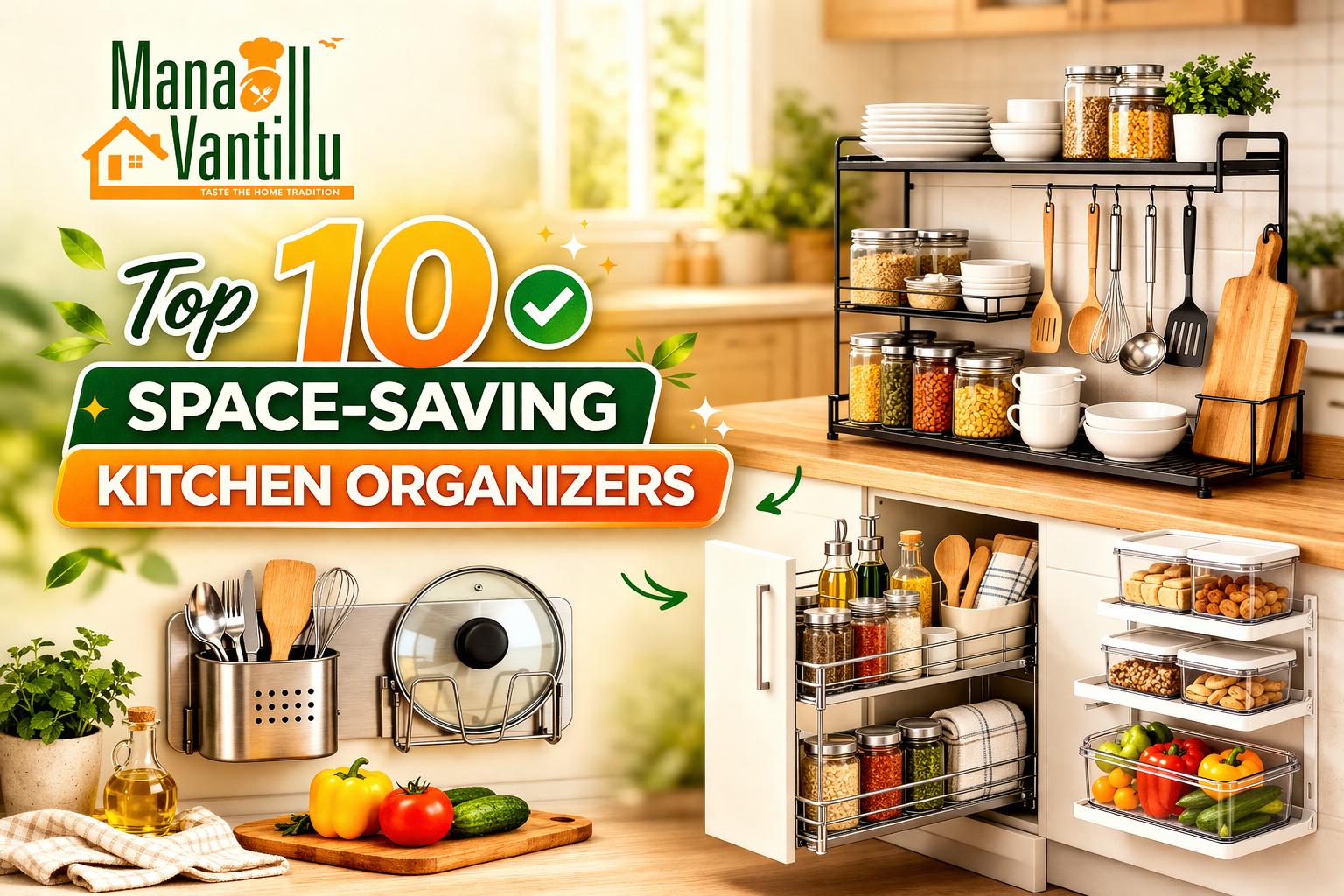
The good news is that the solution is rarely a renovation. Most kitchen organization problems can be solved, elegantly and affordably, with the right organizers. The Top 10 Space-Saving Kitchen Organizers in this article are the kind that actually work in real homes, for real families, with real cooking habits. Each one addresses a specific storage problem, fits into kitchens of different sizes, and makes the everyday experience of cooking calmer and more enjoyable.
Start with one or two that address your biggest frustrations. The difference you feel in your daily kitchen routine will motivate the rest.
1. Pull-Out Drawers and Baskets
What it is: Wire or solid-platform baskets mounted on sliding rails inside existing cabinets, allowing you to pull the entire contents of a shelf forward rather than reaching to the back.
Why it saves space: The deepest problem in most kitchen cabinets is not a lack of space, it is a lack of access. Items at the back of a standard shelf are effectively invisible and unused, while the accessible front portion is overcrowded. Pull-out drawers solve this by making the full depth of the cabinet usable.
Where to use it: Lower cabinets are the highest-value location, particularly for pots, pans, storage containers, and pantry staples that you use frequently. Pull-out baskets also work exceptionally well in pantry cabinets for organizing vegetables, onions, and garlic.
Daily benefit: No more unpacking an entire shelf to reach the pressure cooker at the back. Everything is visible and reachable with a single pull.
Example: In a compact 2BHK kitchen in Bangalore, replacing two standard lower shelves with pull-out baskets effectively doubled the usable storage in those cabinets, without any structural changes.
Material tip: Stainless steel or powder-coated wire baskets are easy to clean and rust-resistant. Avoid plain chrome in humid kitchens.
2. Wall-Mounted Spice Racks
What it is: Shelves, rails, or tiered rack systems mounted directly on kitchen walls to store spice jars, small bottles, and frequently used condiments at eye level.
Why it saves space: Spices are among the most space-inefficient items in most kitchens, stored in a drawer or cabinet, they stack inward and you can only see the top layer. A wall-mounted rack brings everything into a single visible plane, freeing the cabinet or drawer for something else entirely.
Where to use it: The wall beside or above the cooking hob is ideal, spices within arm’s reach of where you actually need them, at eye level, without opening a door.
Daily benefit: Reaching for jeera or haldi without opening three containers first. The cooking flow improves when the spices are right there, visible and accessible.
Example: A wall rail with magnetic spice containers beside the stove is a popular solution in compact kitchens, takes up virtually no floor or shelf space, but stores 15–20 spice jars in easy reach.
Material tip: Stainless steel wall racks are more durable and hygienic than painted iron or plastic alternatives, and easier to wipe clean in a high-steam cooking environment.
3. Under-Shelf Baskets
What it is: Wire baskets that clip or slide onto the underside of an existing shelf, creating a second storage layer beneath it without any drilling or modification.
Why it saves space: Most shelves have significant vertical space between them that is simply wasted. Under-shelf baskets occupy this gap with lightweight items, pouches, foil boxes, fruit, or dishcloths, without disrupting the shelf above.
Where to use it: Inside cabinets between existing shelves, or under open shelves in a pantry or on a kitchen island. Works particularly well in refrigerators too for storing yogurt containers or leftover boxes.
Daily benefit: Small flat items, seasoning packets, tea boxes, oil sachets, finally have a home that is not the counter.
Example: In a kitchen with open shelves, an under-shelf basket below the spice shelf stores all the dry seasoning pouches and keeps them off the counter without a single nail or screw.
4. Stackable Storage Containers
What it is: Food storage containers designed to stack cleanly on top of each other in uniform heights and footprints, often with locking or nesting lids.
Why it saves space: Non-uniform containers are one of the most common causes of cabinet chaos. Mismatched dabbas, lids that do not correspond to bases, and containers of wildly different heights mean that most of the cabinet space between the top of a container and the shelf above it is empty. Uniform stackable sets eliminate this vertical waste.
Where to use it: Pantry shelves, refrigerator shelves, and dry goods storage. Stackable containers are particularly transformative for storing pulses, grains, flours, and nuts.
Daily benefit: Being able to see every container at a glance, stack them in a single column, and pull out exactly what you need without disturbing everything else.
Example: Replacing a cabinet full of varied size dabbas with a set of 12 stackable glass containers with bamboo lids freed up an entire shelf for other items, and made the pantry genuinely enjoyable to use.
Material tip: Glass or BPA-free food-grade plastic is preferable for containers that store food directly. Glass is more hygienic for long-term dry goods storage; lightweight plastic is practical for daily use.
5. Over-the-Sink and Sink-Side Organizers
What it is: Racks, caddies, or shelf units that sit over or beside the sink to hold sponges, dish soap, scrubbers, brushes, and drying items without occupying counter space.
Why it saves space: The area immediately beside and above the sink is among the most contested real estate in a small kitchen. Over-sink organizers use this vertical space without adding to counter clutter.
Where to use it: Directly over or beside the kitchen sink. Expandable over-sink racks can also double as a drying rack for small items.
Daily benefit: Sponges, soaps, and cleaning items have a permanent, designated home. The counter beside the sink stays clear for food preparation.
Example: A stainless-steel over-sink caddy with three sections, soap, sponge, and brush, plus a small drain tray reduces counter clutter by three or four individual items while improving the hygiene of cleaning supplies storage.
6. Corner Shelf Organizers
What it is: Rotating (lazy Susan), L-shaped, or tiered shelf units designed specifically for corner cabinets and corner countertop spaces that are typically difficult to access.
Why it saves space: Corner spaces in standard kitchens are notoriously underutilized, items stored in corner cabinets are hard to reach, difficult to see, and often neglected. A rotating or L-shaped corner organizer makes this space genuinely functional.
Where to use it: Lower corner cabinets (rotating carousels are most effective here), upper corner cabinets (tiered shelves work well), and counter corners.
Daily benefit: Items that previously lived in an inaccessible corner are now within easy reach with a simple rotation or pull.
Example: A two-tier rotating carousel in a lower corner cabinet store all the oil and condiment bottles that used to crowd the countertop, reachable with a single turn.
7. Hanging Hooks and Rails
What it is: Wall-mounted rails with hooks, pegboards with pegs, or adhesive hooks that allow pots, pans, ladles, and utensils to hang vertically on the wall or inside cabinet doors.
Why it saves space: Pots and pans are among the most space-intensive kitchen items per use-frequency ratio. They are large, irregularly shaped, and difficult to stack without scratching. Hanging them vertically eliminates stacking entirely and brings frequently used items to immediate reach.
Where to use it: The wall beside the cooking hob is the classic location for hanging pots. Cabinet door interiors are excellent for hanging smaller tools, graters, peelers, measuring spoons.
Daily benefit: The daily routine of pulling a pan from a crowded cabinet, rearranging everything it was stacked with, and then replacing it afterward is eliminated entirely.
Example: A stainless-steel rail mounted beside the stove with S-hooks stores six frequently used pots and pans. They are clean, visible, and accessible in seconds.
8. Pot and Lid Organizers
What it is: Vertical plate-style racks or adjustable dividers that store pots, pans, and lids in a vertical rather than horizontal stacking arrangement.
Why it saves space: Lids are the great disorganizers of the kitchen cabinet, they nest poorly, slip, and require you to unstack everything to find the right one. A dedicated lid organizer stores lids vertically, in size order, and makes matching a lid to a pot an instant task rather than a search expedition.
Where to use it: Lower cabinets beside the stove, inside deep drawers, or as a standalone countertop organizer.
Daily benefit: Finding the right lid immediately instead of excavating through a stack of pans to get to it.
Example: An adjustable vertical divider in a lower cabinet stores four pots on their sides and their lids behind them, the entire system takes the same space that previously held two pots in a stack.
9. Drawer Dividers
What it is: Adjustable or fixed inserts that divide a kitchen drawer into segmented compartments for cutlery, utensils, or small tools.
Why it saves space: An undivided kitchen drawer is a gradually worsening chaos , items migrate, mix, and pile up, making the drawer both full-seeming and actually unusable. Dividers create permanent homes for specific items and prevent the random accumulation that makes drawers dysfunctional.
Where to use it: Cutlery drawers, utensil drawers, and tool drawers. Adjustable bamboo or expandable plastic dividers fit most standard drawer sizes.
Daily benefit: Every item in the drawer has a dedicated space. Finding a specific item takes one second instead of a rummage.
Example: A six-compartment bamboo drawer insert in the cutlery drawer, storing forks, spoons, teaspoons, knives, serving spoons, and small tools separately, makes the drawer twice as functional using exactly the same space.
Material tip: Bamboo dividers are a popular choice for their durability, natural appearance, and ease of cleaning.
10. Foldable and Nested Storage Items
What it is: Colanders, bowls, cutting boards, and storage containers designed to collapse flat or nest inside each other for compact storage when not in use.
Why it saves space: Items used occasionally but stored permanently take up disproportionate cabinet space. Foldable colanders, silicone nested bowls, and nesting measuring cups store in a fraction of the space their rigid equivalents require.
Where to use it: Anywhere that occasionally-used items take up permanent full-volume storage space, colanders, mixing bowls, measuring equipment, and snack bowls.
Daily benefit: The cabinet space freed by foldable items can be used for items you reach for every day.
Example: A set of silicone nested measuring cups folds flat to 2 cm, storing in the same drawer space previously occupied by a single rigid measuring jug.
Conclusion
A well-organized kitchen is not a luxury; it is a daily quality-of-life investment. The Top 10 Space-Saving Kitchen Organizers in this article are not about making your kitchen look Instagram-perfect. They are about making it work better, feel calmer, and support the daily cooking routines of a real family in a real home.
Start with one or two organizers that address the frustrations you feel most often, the lid you can never find, the spices you are always rummaging through, the counter that is never clear. Build from there, one practical improvement at a time.
Explore more kitchen organization tips, product guides, and home management ideas at Mana Vantillu. Share your own organization wins in the comments, we would love to hear what has made the biggest difference in your kitchen.