A home that smells fresh is a home that feels welcoming, to you, your family, and every guest who walks through the door. But household Odors are persistent, sneaky, and deeply tied to daily life: the fish curry that lingered three days too long, the wet-dog corner of the living room, the bathroom that somehow never quite smells clean, or the closet with that faint mustiness that no amount of airing seems to fix.
Odors are not just a comfort issue. Persistent smells from Mold, pet waste, or chemical residues can affect respiratory comfort, mood, and the overall sense of cleanliness in a space. The good news: you do not need harsh chemicals or expensive contractors. The right Odor-absorbing product, placed correctly and used consistently, makes a measurable difference within days.
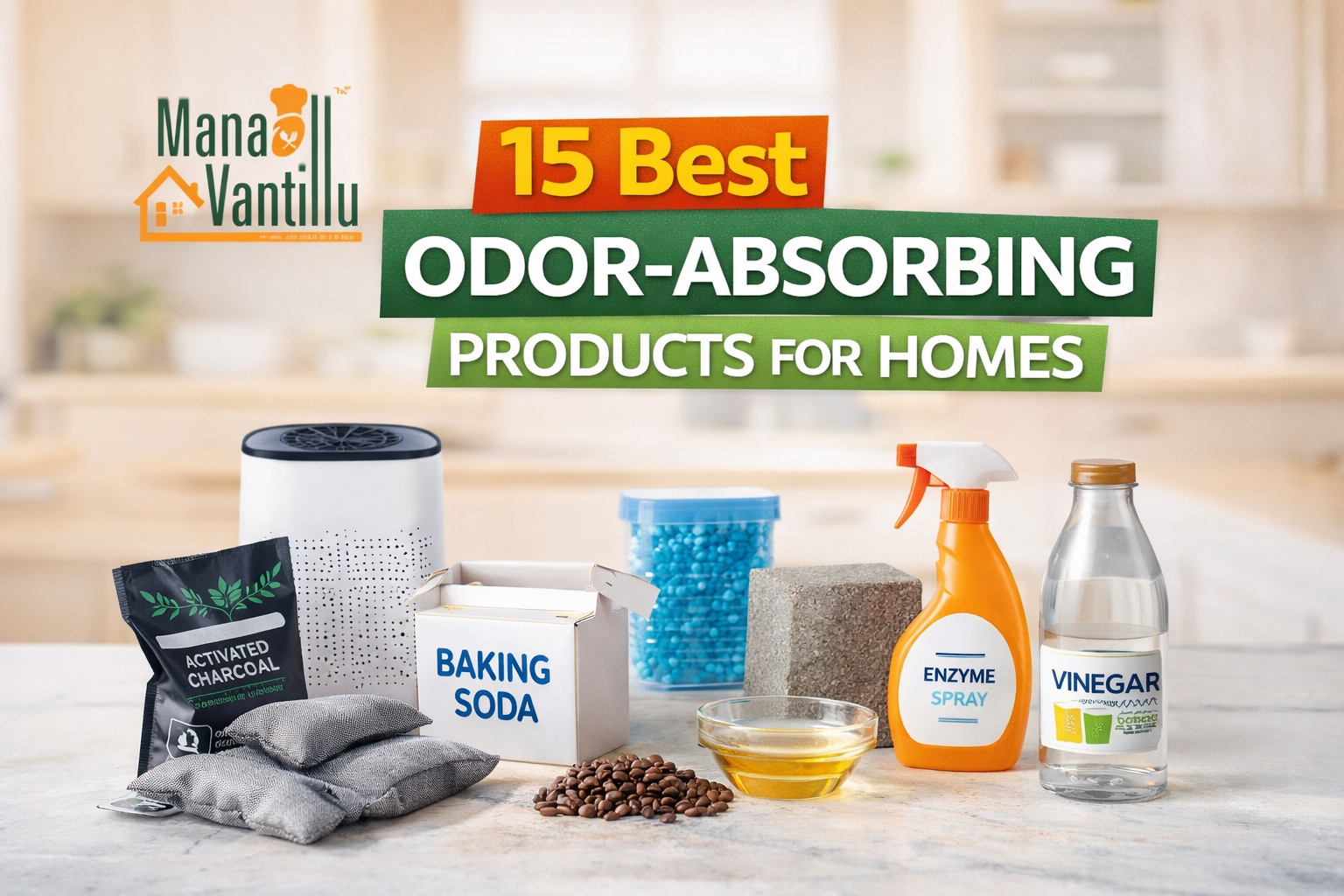
This guide covers the 15 best Odor-absorbing products for homes, what each one does, where it works best, how to use it safely, and a simple seven-day home test to verify it is actually working for your specific Odor problem.
- Activated charcoal / coconut carbon bags, Passive broad-spectrum adsorption for fridges, shoe racks, and closets.
- Baking soda, Classic, affordable Odor buffer best used in fridges and on carpets.
- Zeolite mineral blocks, Long-lasting natural mineral adsorption for basements, closets, and damp areas.
- Odor-absorbing gel beads, Compact, scentless neutralizers ideal for bathrooms and small enclosed spaces.
- Enzymatic neutralizer sprays, Biologically break down pet urine, food spills, and organic Odor sources.
- Ozone-free air purifiers with carbon + HEPA, Whole-room filtration for smoke, cooking, and airborne Odors.
- Vent and HVAC carbon filters, Whole-home solution for persistent cooking or smoke Odors circulated by HVAC.
- White distilled vinegar (bowls or spray), Fast DIY neutralizer for strong cooking Odors, short-term use.
- Used dried coffee grounds, Natural fridge and small-space deodorizer that absorbs and gently scents.
- Refrigerator charcoal tray / fridge filter, Purpose-built for food smells inside the fridge and freezer.
- Bamboo charcoal air-purifying bags, Décor-friendly wardrobe and children’s room deodorizer.
- Portable electric ozone-free deodorizers / ionizers, Active deodorizing for shoes, gym bags, and small closets.
- Enzyme-based dishwasher and sink cleaners, eliminate drain smells by targeting organic biofilm at the source.
- Baking soda + essential oil sachets, Gentle DIY absorber with light natural scent for drawers and beds.
- Washable carbon-impregnated fabric covers, Long-term Odor management for mattresses and upholstered furniture.
1. Activated Charcoal / Coconut Carbon Bags, Broad-Spectrum Passive Adsorption
Activated charcoal, especially coconut-shell carbon, has a highly porous surface structure that physically traps Odor molecules in a process called adsorption. It does not mask smells; it captures them at a molecular level without releasing anything back into the air.
Best for:
- Shoe racks and cabinets
- Refrigerators (small to mid-size bags)
- Closets and wardrobes
- Cars and gym bags
How to use it:
- 0–7 days: Place one 100–200g bag per 10 sq ft of enclosed space. For shoes, one bag per pair works well. For the fridge, one bag on each shelf level.
- Maintenance: Sun-refresh bags for 1–2 hours outdoors every 4–6 weeks, UV reactivates the carbon. Replace every 6–12 months.
- Safety: Non-toxic, child and pet safe. Do not puncture bags, loose activated carbon can stain fabrics.
Pros: Chemical-free, reusable, works on most organic Odors, no fragrance. Cons: Slow to act on very strong Odors (3–7 days minimum); does not kill Odor sources, only captures.
Quick test: Place a bag in a closed shoe cabinet; compare smell intensity at 72 hours versus day one.
Cost & eco note: Low–medium cost. Compost spent carbon; bags are often reusable packaging.
2. Baking Soda, The Classic Kitchen Standby
Sodium bicarbonate is a mild amphoteric compound, it reacts with both acidic and basic Odor molecules, neutralizing them chemically rather than covering them up. It is particularly effective on food-related smells that tend toward acidity.
Best for:
- Open fridge shelves
- Carpets and rugs (dry application)
- Trash cans (sprinkle on base)
- Litter box area (light dusting)
How to use it:
- 0–7 days: Pour about half a cup into a wide, shallow bowl and place uncovered in the fridge or target area. For carpets, sprinkle generously, let sit 15–30 minutes, then vacuum.
- Maintenance: Replace fridge bowl every 1–3 months; refresh carpet application monthly.
- Safety: Extremely safe. Keep away from open food; do not apply to wet surfaces where it may leave white residue.
Pros: Cheap, accessible, multi-purpose, truly neutralizes (not masks). Cons: Requires open-air contact to work; limited range, effective only in the immediate vicinity.
Quick test: Mark an open box in the fridge on day one; note any change in smell intensity over 48 hours.
Cost & eco note: Very low cost. Fully biodegradable; dissolves safely in water.
3. Zeolite Mineral Blocks, Long-Lasting Damp-Area Adsorption
Zeolite is a naturally occurring aluminosilicate mineral with a honeycomb-like microporous structure. It adsorbs ammonia, amines, and moisture-related Odors, making it particularly effective in humid environments where Mold-related musty smells develop.
Best for:
- Basements and laundry rooms
- Closets in humid climates
- Pet sleeping areas
- Bathrooms with poor ventilation
How to use it:
- 0–7 days: Place 1–2 blocks per 50–100 sq ft in target area; position near floor level where musty air tends to accumulate.
- Maintenance: Sun-refresh every 4–6 weeks; replace after 12–18 months of active use.
- Safety: Non-toxic, safe for pets and children. Does not release any compounds.
Pros: Exceptionally long-lasting; handles moisture and Odor simultaneously; no fragrances. Cons: Heavy and bulky compared to bags; less effective on smoke or food-specific Odors.
Quick test: Place in a damp closet; check for musty smell reduction at 5–7 days.
Cost & eco note: Medium cost. Fully natural mineral; can be returned to soil as mineral supplement after use.
4. Odor-Absorbing Gel Beads, Compact, Scentless Bathroom Neutralizers
Polymer or silica gel beads infused with Odor-neutralizing compounds absorb volatile compounds from the air through a combination of surface adsorption and chemical neutralization. Most quality products are fragrance-free, they remove the smell rather than covering it.
Best for:
- Bathrooms and powder rooms
- Under sinks
- Small enclosed spaces (lockers, storage boxes)
- Near litter boxes
How to use it:
- 0–7 days: Place an open container of gel beads on the bathroom vanity or shelf; keep container away from direct water contact.
- Maintenance: Stir beads weekly to expose fresh surface area. Replace when beads harden or discolor (typically every 4–8 weeks).
- Safety: Keep away from children who might ingest beads. Wash hands after handling.
Pros: Compact; works continuously without electricity; no scent added. Cons: Needs regular replacement; less effective in large, well-ventilated spaces.
Quick test: Place in a closed bathroom; open and smell after 24 hours and again at 72 hours.
Cost & eco note: Low–medium cost. Check packaging for recyclability, some brands use refillable containers.
5. Enzymatic Neutralizer Sprays, Biologically Breaking Down Organic Odors
Enzymatic sprays contain active biological enzymes, typically protease, lipase, and amylase blends, that break down organic compounds (urine, feces, vomit, food spills) at the molecular level. This eliminates the Odor source rather than masking it.
Best for:
- Pet urine stains on carpets and upholstery
- Kitchen spills and food prep surfaces
- Baby changing areas
- Garbage bin interiors
How to use it:
- 0–7 days: Saturate the affected area generously, the enzyme needs to reach the entire soiled material, not just the surface. Allow to air dry completely; do not wipe before drying.
- Maintenance: Reapply if Odor returns after the first drying cycle; some deep-soaked materials need two to three applications.
- Safety: Keep pets and children away from the treated area until fully dry. Do not mix with bleach, it deactivates the enzymes.
Practical tip: For pet accidents, blot excess moisture first, then apply spray and cover with a damp towel for 30 minutes to extend enzyme contact time.
Pros: Actually, eliminates the source; highly effective on pet Odors; safe for most fabrics. Cons: Takes time to dry and activate; not effective on smoke or chemical Odors.
Quick test: Treat a small pet-stained area; check for smell after full drying and again at 48 hours.
Cost & eco note: Medium cost. Look for biodegradable enzyme formulas with plant-based surfactants.
6. Ozone-Free Air Purifiers with Activated Carbon + HEPA, Whole-Room Filtration
Air purifiers combining activated carbon filtration with HEPA capture simultaneously adsorb gaseous Odor compounds (carbon layer) and trap airborne particles including cooking residue, pet dander, and smoke particulates (HEPA layer). The ozone-free designation is critical, ozone generators can irritate airways and are unsafe for occupied spaces.
Best for:
- Living rooms and bedrooms with persistent Odors
- Open-plan kitchens
- Homes with smokers or high cooking activity
- Pet owner households
How to use it:
- 0–7 days: Position the unit in the center of the target room, away from walls; run on medium to high setting for the first 48 hours to establish baseline air quality.
- Maintenance: Replace HEPA filter every 6–12 months; replace carbon filter every 3–6 months depending on Odor load. Vacuum pre-filters monthly.
- Safety: Confirm the unit is CARB-certified and ozone-free. Never use ozone generators in occupied rooms.
Pros: Most comprehensive solution for persistent airborne Odors; dual-action filtration. Cons: Higher upfront and running cost; requires regular filter replacement.
Quick test: Run for 24 hours in a room with a noticeable Odor; compare intensity before and after.
Cost & eco note: High cost. Choose brands with recyclable filter components; energy-efficient (Energy Star) models reduce running cost.
7. Vent and HVAC Carbon Filters, Whole-Home Odor Management
Carbon-impregnated HVAC filters replace standard particulate filters in your home’s air handling system, adsorbing odorous compounds from air as it circulates through the ductwork, treating the entire home simultaneously.
Best for:
- Homes with central HVAC systems
- Persistent whole-home cooking or smoke Odors
- Multi-pet households
- Rental properties between tenants
How to use it:
- 0–7 days: Identify your HVAC filter size and replace with a carbon + particulate combination filter. Ensure the filter fits snugly with no air bypass gaps.
- Maintenance: Replace every 1–3 months depending on Odor load and air quality.
- Safety: Use MERV-rated filters appropriate for your HVAC system, too-restrictive filters can strain the blower motor.
Pros: Whole-home reach; low effort once installed; combines Odor and particulate control. Cons: Requires a central HVAC system; carbon filters need more frequent replacement than standard filters.
Quick test: Note whole-home air freshness 48 hours after replacing the filter with a carbon model.
Cost & eco note: Low–medium cost per filter. Check manufacturer’s recycling programs for used filters.
8. White Distilled Vinegar, Fast DIY Kitchen Neutralizer
Acetic acid in white vinegar reacts with and neutralizes alkaline Odor compounds, particularly volatile amines from fish and meat cooking. It is a short-term, rapid solution rather than a long-term absorber.
Best for:
- Post-cooking kitchen deodorizing
- Trash can interiors
- Cutting boards and kitchen surfaces
- Short-term bathroom deodorizing
How to use it:
- 0–7 days: Place a bowl of undiluted white vinegar near the Odor source (not directly on surfaces). For trash cans, spray interior lightly and air dry.
- Maintenance: Refresh or replace every 24–48 hours, vinegar evaporates and loses efficacy quickly.
- Safety: Avoid using near natural stone surfaces (marble, granite) , acetic acid can etch the surface.
Practical tip (chef-tested): During heavy frying, place an open bowl of white vinegar on the counter edge; it absorbs airborne oil and fish compounds effectively for 1–2 hours.
Pros: Very cheap, immediate effect, truly neutralizes rather than masks. Cons: Short-lived; the vinegar smell itself dissipates within 20–30 minutes but may be unpleasant temporarily.
Quick test: Place a bowl during cooking; note air quality 30 minutes after clearing the bowl.
Cost & eco note: Very low cost. Fully biodegradable; pour down drain safely.
9. Used Dried Coffee Grounds, Natural Fridge and Small-Space Deodorizer
Dried, used coffee grounds adsorb food Odors through their porous surface structure. Nitrogen compounds in coffee also chemically interact with sulfur-containing Odor compounds, making it surprisingly effective on strong food smells.
Best for:
- Fridge and freezer
- Kitchen drawers
- Gym bags and shoe areas
- Small storage spaces
How to use it:
- 0–7 days: Spread used grounds on a plate or in an open container; allow to dry fully before placing in the target area. Replace when the coffee smell fades (typically 1–2 weeks).
- Maintenance: Refresh weekly; compost spent grounds.
- Safety: Coffee is mildly toxic to dogs and cats, keep away from areas where pets can access loose grounds.
Pros: Free or near-free (reuse from daily coffee); effective on strong food Odors; compostable. Cons: Short effective life; potential mess if loose grounds are disturbed; unsafe near pets.
Quick test: Place a container in a smelly fridge; compare Odor level at 24 and 72 hours.
Cost & eco note: Zero cost (reused). Fully compostable, zero waste solution.
10. Refrigerator Charcoal Trays and Fridge Filters, Designed for Food Smells
Purpose-built fridge deodorizer trays and cartridges use activated carbon in a form factor optimized for fridge airflow , designed to sit on door shelves or interior surfaces and continuously adsorb food-generated volatile compounds.
Best for:
- Fridge interior (all zones)
- Freezer Odor management
- Compost bin areas
How to use it:
- 0–7 days: Remove existing baking soda or improvised solutions; place the fridge filter on the middle shelf where airflow is highest.
- Maintenance: Replace every 1–3 months; some models have color-change indicators showing saturation.
- Safety: Sealed designs prevent carbon dust from contacting food.
Pros: Optimized for fridge conditions; cleaner than loose baking soda; color indicators on premium models. Cons: Ongoing replacement cost; less effective if the fridge has spoiled food that needs removal first.
Quick test: Place fresh filter after clearing expired food; check Odor at 48 hours.
Cost & eco note: Low–medium cost. Choose brands using natural activated carbon and recyclable housings.
11. Bamboo Charcoal Air-Purifying Bags, Décor-Friendly Wardrobe Deodorizers
Bamboo charcoal offers similar adsorption to coconut carbon but is compressed into aesthetically pleasing linen bag formats suited to wardrobes, children’s rooms, and living spaces where appearance matters.
Best for:
- Wardrobes and clothing drawers
- Children’s bedrooms
- Living room corners
- Car interiors
How to use it:
- 0–7 days: Hang a bag in the wardrobe or place flat in a drawer; one 200g bag per 30 sq ft is a reasonable guide.
- Maintenance: Sun-refresh monthly; replace annually.
- Safety: Non-toxic; safe for children’s rooms. Check that bags use natural bamboo carbon without chemical additives.
Pros: Attractive; chemical-free; safe for sensitive spaces; effective on musty and mild odors. Cons: Less effective on heavy-duty Odors like smoke or pet accidents.
Quick test: Place in a closed wardrobe; compare smell when opening at 3 days versus before placement.
Cost & eco note: Low–medium cost. Bamboo is a sustainable, renewable material; compostable at end of life.
12. Portable Electric Ozone-Free Deodorizers, Shoes and Small Spaces
Small plug-in or USB-powered devices use UV light, ionization, or activated carbon circulation to actively process air in very small, enclosed spaces. The ozone-free distinction is essential, avoid any device marketed on ozone generation.
Best for:
- Shoes and sports equipment
- Gym bags and lockers
- Small wardrobes
- Enclosed storage
How to use it:
- 0–7 days: Insert into shoes after wear; run for 1–2 hours per session. For bags, zip shut with the device inside for a treatment cycle.
- Maintenance: Clean the device exterior weekly; replace UV bulbs or carbon elements per manufacturer schedule.
- Safety: Confirm ozone-free certification before purchasing. Do not use in occupied sleeping spaces.
Pros: Active treatment rather than passive; highly effective for shoe Odors specifically. Cons: Requires power; must confirm ozone-free status; not effective for large areas.
Quick test: Use in shoes for three consecutive days; compare versus an untreated pair of similar shoes.
Cost & eco note: Medium cost. Look for energy-efficient USB-powered models with replaceable components.
13. Enzyme-Based Dishwasher and Sink Cleaners, Eliminating Drain Odors
Enzyme cleaners designed for drains and dishwashers break down the organic biofilm, food residue, fat, and soap scum, that accumulates in pipes and drain components and produces persistent drain Odor.
Best for:
- Kitchen sink drains
- Dishwasher drums and door seals
- Bathroom drains with organic buildup
- Washing machine drums
How to use it:
- 0–7 days: Pour the cleaner down the drain at night (lower-use period) so enzymes have dwell time. For dishwashers, run a hot empty cycle with the cleaner.
- Maintenance: Use monthly as a preventive measure; increase to weekly if drain Odor returns.
- Safety: Keep away from children until surfaces are rinsed; do not mix with bleach.
Pros: Targets the actual source of drain smells; prevents recurrence; safe for plumbing. Cons: Less effective on chemical or inorganic Odor sources; requires regular application.
Quick test: Apply on day one; check drain Odor at 48 hours and again at one week.
Cost & eco note: Low–medium cost. Choose biodegradable, plant-enzyme-based formulas.
14. Baking Soda + Essential Oil Sachets, Gentle DIY Absorber
A simple DIY blend of baking soda with a few drops of essential oil (lavender, tea tree, or eucalyptus) combines the Odor-neutralizing chemistry of baking soda with a mild natural scent. This is a true hybrid: the baking soda absorbs; the essential oil provides a gentle, non-synthetic fragrance note.
Best for:
- Dresser drawers
- Linen closets
- Under beds
- Shoe bags
How to use it:
- 0–7 days: Mix 1/2 cup baking soda with 10 drops of essential oil in a small open jar or fabric sachet. Place in the target area uncovered.
- Maintenance: Refresh oil drops every 2–3 weeks; replace baking soda every 6–8 weeks.
- Safety: Some essential oils are harmful to cats (especially tea tree, eucalyptus, citrus), use lavender only in cat households and consult a vet.
Pros: Inexpensive; customizable scent; genuinely absorbs and gently scents. Cons: Mild effect only, not suitable for strong Odors; requires regular maintenance.
Quick test: Place in a linen drawer for 3 days; compare the scent quality when opening.
Cost & eco note: Very low cost. Fully natural and biodegradable; reusable jars and fabric sachets.
15. Washable Carbon-Impregnated Fabric Covers, Long-Term Mattress and Upholstery Solution
Mattress pads, pillow covers, and furniture covers impregnated or lined with activated carbon fiber continuously adsorb body Odors, moisture compounds, and dust-related smells from bedding and upholstery, the hardest surfaces to deodorize because they cannot simply be washed daily.
Best for:
- Mattresses (especially in humid climates)
- Sofas and upholstered chairs
- Pet beds and sleeping areas
- Pillows
How to use it:
- 0–7 days: Fit the cover over the mattress or cushion; the carbon works continuously from first use.
- Maintenance: Wash the cover every 2–4 weeks per manufacturer instructions, washing reactivates the carbon fiber.
- Safety: Confirm carbon is embedded in the fabric, not loose particles. Check wash temperature instructions to maintain carbon efficacy.
Pros: Long-term, self-maintaining solution; no disposable components; covers are washable. Cons: Higher upfront cost; requires correct washing to maintain performance; limited to surfaces they cover.
Quick test: Fit cover on mattress; compare morning freshness at day 7 versus before placement.
Cost & eco note: High cost upfront; long lifespan (2–5 years) makes total cost reasonable. Look for OEKO-TEX certified fabrics.
Conclusion
The right Odor solution depends entirely on what you are fighting. For passive, ongoing control across closets, fridges, and shoes, activated charcoal and bamboo bags do the work quietly and cheaply. For pet accidents and food spills, enzymatic sprays are the only products that actually eliminate the source. For whole-home air quality, an ozone-free HEPA + carbon air purifier is the most comprehensive investment.
Start with one targeted solution for your biggest Odor problem, run the seven-day home test, and build from there. A combination of passive adsorbents, occasional enzymatic treatment, and a good air purifier covers the vast majority of household Odor challenges, without harsh chemicals, synthetic fragrances, or expensive professional services.