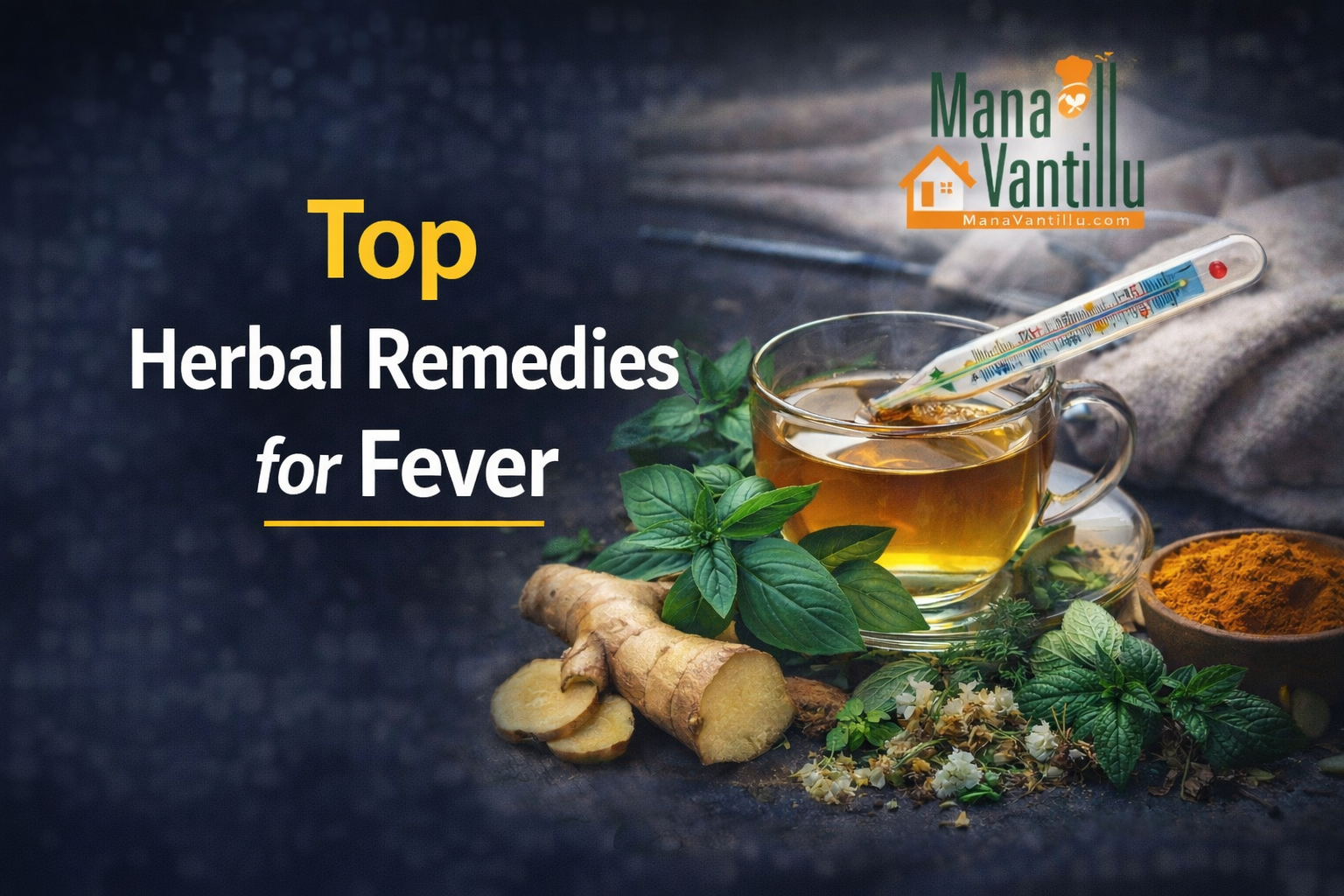
A rising temperature is one of the body’s most intelligent responses, a carefully orchestrated immune reaction designed to make conditions less hospitable for pathogens. But that does not make a fever comfortable, especially for a child flushed and restless at 2am. The top 10 herbal remedies for fever in this guide offer gentle, kitchen-accessible support for mild fever symptoms: promoting sweating, easing accompanying aches, supporting hydration, and providing warmth and comfort while the body does its work.
These are not cures. They are companions, remedies passed down through generations and, in several cases, now studied in peer-reviewed research for their anti-inflammatory, diaphoretic, and immune-supportive properties.
If this guide helps your household, share it with a friend or save it to your recipe collection, good information is its own kind of medicine.
What Is a Fever and When Is Herbal Support Appropriate?
A fever is a controlled elevation of core body temperature, typically above 38°C (100.4°F), orchestrated by the hypothalamus in response to infection, inflammation, or immune activation. The process is purposeful: elevated temperature slows the replication of many pathogens, activates immune cells, and signals the body to redirect resources toward healing (World Health Organization, Fever Guidelines; NIH National Library of Medicine).
Herbal support is most appropriate for:
- Mild fever in adults, below 39°C (102.2°F) with no severe accompanying symptoms
- Comfort care during recovery, supporting sleep, hydration, and reducing aches alongside conventional care
- Culturally familiar remedies that complement hydration and rest
Herbal remedies work through several mechanisms: diaphoretics (like elderflower and yarrow) promote perspiration and support the body’s natural cooling process; anti-inflammatories (like ginger and turmeric) reduce systemic inflammation; adaptogens (like tulsi) support immune resilience; and demulcents (like chamomile) soothe the nervous system and support rest.
They are not appropriate as the sole response to high fever, infant fever, or fever with serious symptoms. Those situations require professional evaluation, always.
1. Ginger (Zingiber officinale)
What it does: Ginger contains gingerols and shogaols, compounds with documented anti-inflammatory and diaphoretic properties that can support the body’s natural sweating response during fever (Mashhadi et al., 2013, International Journal of Preventive Medicine).
How to prepare:
- Adult tea: Slice 2–3 cm of fresh ginger root thinly. Simmer in 2 cups of water for 10 minutes. Strain, add honey and lemon to taste. Drink warm, up to 3 cups per day.
- For children over 6 (with medical advice): Half the concentration, simmer 1 cm of ginger in 2 cups of water for 5 minutes.
When it helps: Mild fever with chills, nausea, or body aches; early-stage cold or flu.
Precautions: Avoid high doses in pregnancy. May interact with blood-thinning medications including warfarin. Not recommended as a standalone remedy for children under 2.
Kitchen tip: Add a pinch of black pepper, piperine enhances the bioavailability of ginger’s active compounds.
2. Tulsi / Holy Basil (Ocimum tenuiflorum)
What it does: Revered in Ayurvedic practice for millennia, tulsi contains eugenol and rosmarinic acid, compounds with antibacterial, anti-inflammatory, and immunomodulatory properties. A 2010 review in the Journal of Ayurveda and Integrative Medicine noted its adaptogenic and antipyretic potential in traditional use (Jamshidi & Cohen, 2017).
How to prepare:
- Tulsi tea: Steep 10–15 fresh tulsi leaves (or 1 tsp dried) in boiling water for 5–7 minutes. Add honey and a slice of ginger. Drink 2–3 times daily.
- For children over 5: Half the leaf quantity; consult a pediatrician before regular use.
When it helps: Fever with respiratory symptoms, early-stage infection, mild viral illness.
Precautions: Use cautiously in pregnancy, tulsi has traditionally been noted to have uterotonic properties in very high doses. Avoid therapeutic amounts while breastfeeding without medical guidance.
Kitchen tip: If you grow tulsi in a pot on the kitchen windowsill, keep it there, fresh leaves steeped immediately retain more volatile oils than dried.
3. Turmeric (Curcuma longa)
What it does: Curcumin, turmeric’s primary active compound, is one of the most studied natural anti-inflammatory agents. Multiple clinical studies have documented its inhibition of NF-κB, a key regulator of inflammatory response (Aggarwal & Harikumar, 2009, International Journal of Biochemistry & Cell Biology).
How to prepare:
- Golden milk: Warm 1 cup of whole milk (or plant milk). Add ½ tsp turmeric powder, a pinch of black pepper, and ½ tsp honey. Drink before bed.
- For children over 2: A quarter-teaspoon turmeric in warm milk is a gentle, well-tolerated option.
When it helps: Fever with body inflammation, joint aches, or accompanying sore throat.
Precautions: At culinary doses, turmeric is safe for most people. Therapeutic doses may interact with blood thinners and diabetes medications. Avoid high supplemental doses in pregnancy.
Kitchen tip: Turmeric without black pepper is significantly less bioavailable. The combination is not just traditional, it is biochemically supported.
4. Peppermint (Mentha × piperita)
What it does: Menthol, peppermint’s primary volatile compound, activates cold-sensitive receptors in the skin, creating a cooling sensation that can provide comfort during fever. It is primarily a symptomatic remedy rather than a fever-reducing agent (WHO Monographs on Selected Medicinal Plants, Vol. 2).
How to prepare:
- Cooling compress: Brew a strong peppermint tea (2 tsp dried leaves per cup of boiling water, steep 10 minutes). Cool to room temperature. Soak a clean cloth and apply to the forehead, wrists, or back of the neck.
- Tea for adults: Drink 1–2 cups of standard-strength peppermint tea for comfort.
When it helps: Mild fever with headache, sinus congestion, or discomfort. Particularly effective as a compress for localized cooling.
Precautions: Do not apply undiluted peppermint essential oil to the skin of children under 6 , menthol can cause respiratory distress. Peppermint tea is generally safe for children over 5 in small amounts. Avoid strong peppermint preparations in infants.
Kitchen tip: Cool the compress tea in the refrigerator for 30 minutes for a noticeably more effective application.
5. Chamomile (Matricaria chamomilla)
What it does: Chamomile contains apigenin, an anti-inflammatory flavonoid, alongside chamazulene, which contributes to its soothing, mild antispasmodic effect. It supports rest and sleep, which are themselves critical to fever recovery (Srivastava et al., 2010, Molecular Medicine Reports).
How to prepare:
- Calming tea: Steep 2 tsp dried chamomile flowers (or one tea bag) in freshly boiled water for 5 minutes. Add honey to taste. Drink warm before rest.
- For children over 1 (not infants): A weak chamomile tea, half the adult concentration, can support sleep during mild illness.
When it helps: Fever with restlessness, irritability, difficulty sleeping, or mild stomach upset.
Precautions: Chamomile is in the Asteraceae (daisy) family. Individuals with ragweed allergy may react. Avoid in the first trimester of pregnancy.
Kitchen tip: Float two dried chamomile flowers in the cup alongside the steeped tea, it makes it look as good as it feels.
6. Elderflower (Sambucus nigra, flowers only)
What it does: Elderflower has been used as a traditional diaphoretic, a remedy that promotes mild perspiration, for centuries across European herbal traditions. Emerging research on elderberry (the fruit) suggests immune-supportive properties; the flower shares some of these flavonoid constituents (Vlachojannis et al., 2010, Phytotherapy Research).
How to prepare:
- Elderflower infusion: Steep 1–2 tsp dried elderflowers in 1 cup of just-boiled water for 10–15 minutes. Strain carefully. Drink warm, 2–3 times daily.
- Note: Use only dried flowers from reputable sources. Fresh elderflowers must be prepared correctly, raw elder plant parts contain cyanogenic compounds.
When it helps: Early-stage fever, especially with cold or upper respiratory symptoms; promotes perspiration and comfort.
Precautions: Use only prepared flowers from reputable sources. Avoid raw elder leaves, bark, or berries. Not recommended in pregnancy or for children under 5 without medical guidance.
Kitchen tip: Combine elderflower with a squeeze of lemon and honey, the result is a remedy that genuinely tastes like something you would choose to drink.
7. Yarrow (Achillea millefolium)
What it does: One of the oldest documented medicinal herbs, yarrow has a well-established traditional role as a diaphoretic and mild anti-inflammatory. Its flavonoid content, particularly luteolin, contributes to its anti-inflammatory activity (European Medicines Agency, Community Herbal Monograph on Achillea millefolium).
How to prepare:
- Yarrow tea: Steep 1–2 tsp dried yarrow herb in 1 cup of boiling water for 10 minutes. Strain well. Drink warm up to 3 times daily.
When it helps: Mild fever in adults, particularly where promoting gentle sweating is desired.
Precautions: Yarrow is contraindicated in pregnancy (traditionally used to stimulate uterine contractions). Avoid in individuals with Asteraceae allergy. Not recommended for children under 12 without medical advice. May interact with blood-thinning medications.
Kitchen tip: Yarrow tea is quite bitter on its own, blend with chamomile or add honey to make it palatable.
8. Cinnamon (Cinnamomum verum)
What it does: Ceylon cinnamon contains cinnamaldehyde, which has demonstrated antimicrobial and mild anti-inflammatory properties in laboratory research (Rao & Gan, 2014, Evidence-Based Complementary and Alternative Medicine). At culinary doses, it supports warmth and comfort during fever recovery.
How to prepare:
- Cinnamon ginger tea: Simmer one cinnamon stick and 2 cm sliced ginger in 2 cups of water for 10 minutes. Add honey and lemon. Drink warm.
- For children over 2: Half concentration, one small cinnamon stick in 2 cups of water.
When it helps: Fever with chills, cold extremities, or accompanying sore throat.
Precautions: Stick to Ceylon cinnamon (Cinnamomum verum) rather than Cassia cinnamon (C. aromaticum), Cassia contains higher coumarin levels that can be problematic at therapeutic doses. Avoid high supplemental doses in pregnancy.
Kitchen tip: Reuse the cinnamon stick, simmer it again for a second, milder cup.
9. Eucalyptus (Eucalyptus globulus), Steam Use Only
What it does: Eucalyptus leaf contains cineole (eucalyptol), a compound with expectorant, decongestant, and mild antimicrobial properties. It does not directly reduce fever but significantly relieves the respiratory congestion that often accompanies it (Kehrl et al., 2004, Laryngoscope).
How to prepare:
- Steam inhalation (adults): Add 2–3 drops of food-grade eucalyptus essential oil, or a small handful of fresh/dried leaves, to a bowl of just-boiled water. Lean over the bowl with a towel over your head. Inhale gently for 5–8 minutes.
When it helps: Fever with nasal congestion, sinus pressure, or chest tightness.
Precautions: Never use eucalyptus essential oil on or near the face or chest of children under 10. Menthol and cineole can trigger respiratory distress in young children. For adults only unless directed by a pediatrician. Keep eucalyptus essential oil out of reach of children, even small amounts are toxic if swallowed.
Kitchen tip: Add two drops to the floor of a hot shower rather than using a bowl, the steam disperses it more evenly.
10. Lemon Balm (Melissa officinalis)
What it does: Often overlooked, lemon balm is a gentle nervine and mild antiviral herb in the mint family. Its rosmarinic acid content contributes to anti-inflammatory and antiviral activity, and its calming effect on the nervous system supports the restorative sleep that fever recovery requires (Kennedy et al., 2004, Psychosomatic Medicine).
How to prepare:
- Lemon balm tea: Steep 1–2 tsp dried lemon balm leaves in 1 cup of boiling water for 5–7 minutes. Drink warm. Safe for 2–3 cups per day.
- For children over 4: Half concentration; a gentle option for feverish restlessness at bedtime.
When it helps: Fever with anxiety, restlessness, insomnia, or mild headache.
Precautions: Generally well-tolerated. May interact with thyroid medications, consult a doctor if relevant. Avoid therapeutic doses in pregnancy without medical advice.
Kitchen tip: Combine lemon balm with chamomile in equal parts for a profoundly calming bedtime tea during illness recovery.
Conclusion
A fever is rarely the enemy; it is the immune system doing its job. The herbal remedies for fever in this guide are designed to support that process: to ease the aches, promote rest, encourage gentle sweating, and keep the body hydrated and comfortable while recovery happens naturally.
None of these remedies replace medical care when medical care is needed. Keep the red flag checklist visible in your kitchen, trust your instincts as a parent or caregiver, and reach for the herbs when the situation is mild and the patient is otherwise stable.