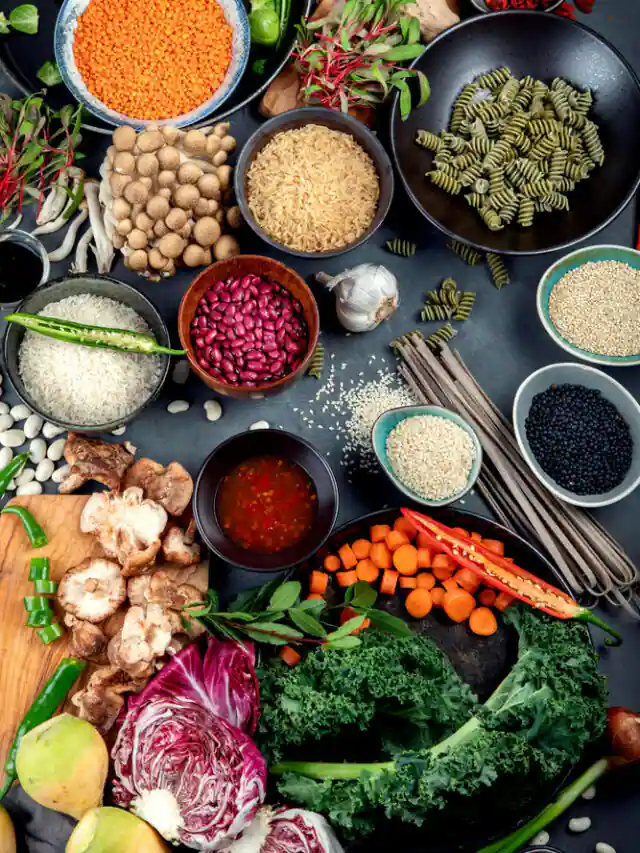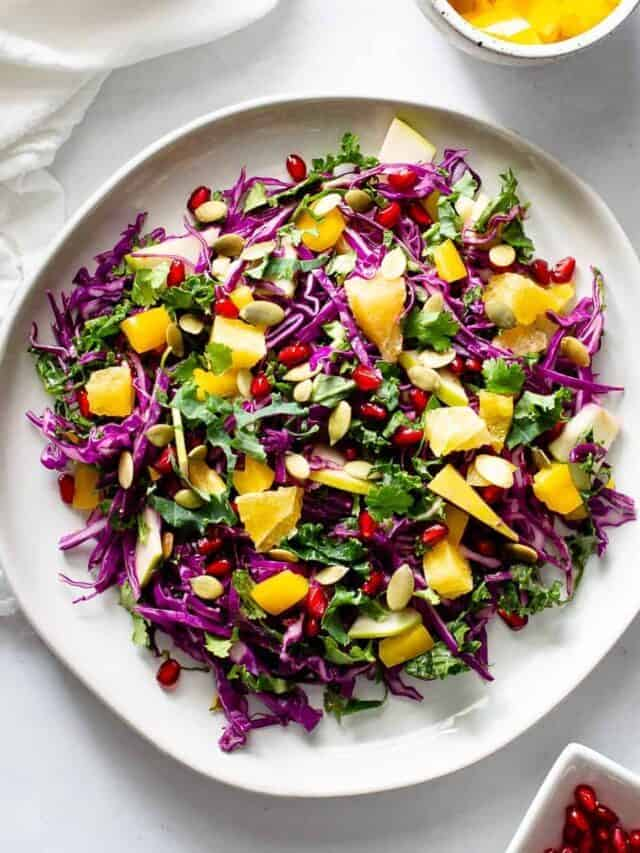
There is something quietly powerful about the food sitting in your kitchen right now. The turmeric in your spice box. The garlic on the counter. The spinach in the fridge and the humble lemon waiting to be squeezed into a glass of warm water. These are not exotic supplements or expensive health products. They are ingredients that generations of Indian families have cooked with every single day, and modern nutrition science is increasingly confirming what traditional wisdom has long understood: consistent, thoughtful daily eating is one of the most effective ways to support the body’s natural defenses.
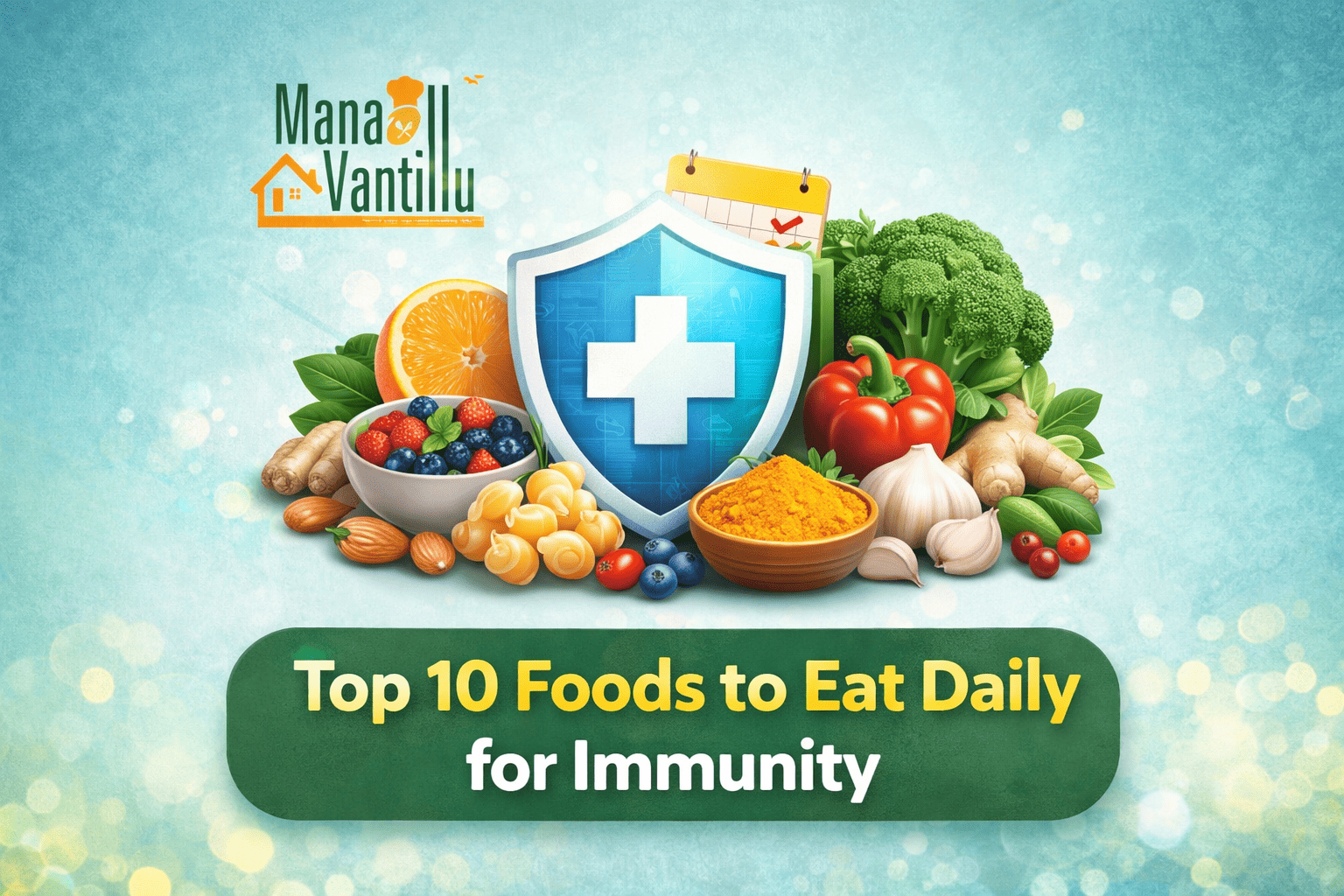
This article explores the top 10 foods to eat daily for immunity, not as a magic cure or a medical prescription, but as a practical, delicious, family-friendly guide to building stronger daily habits one meal at a time. Whether you are a homemaker planning the week’s meals, a parent trying to feed your family better, or simply someone who wants to feel more energetic and resilient through the year’s seasonal changes, this guide is written for you.
1. Turmeric, The Golden Foundation of Every Indian Kitchen
There is a reason turmeric has been central to Indian cooking and Ayurvedic practice for thousands of years. The deep yellow spice contains curcumin, a bioactive compound that has been extensively studied for its antioxidant and anti-inflammatory properties. Chronic low-grade inflammation is increasingly understood as an underlying factor in many health challenges, and turmeric’s ability to help modulate inflammatory responses makes it genuinely valuable as a daily food ingredient.
How to include it daily: Turmeric is already in most Indian cooking, dals, sabzis, rice dishes, and curries. To get meaningful amounts, add a small pinch to your morning warm water or milk. The traditional haldi doodh (golden milk), warm milk with turmeric, a pinch of black pepper, and a small amount of honey or jaggery, is both delicious and a genuinely good daily habit. Black pepper is important here because it contains piperine, which significantly increases the body’s absorption of curcumin.
Kitchen tip: Store turmeric in an airtight container away from direct light, and buy from a trusted source to ensure quality. A little goes a long way, half a teaspoon daily is plenty.
2. Garlic, Small Cloves with Remarkable Nutritional Depth
Raw garlic contains allicin, a sulfur compound that forms when garlic is crushed or chopped and has been studied for its potential antimicrobial and immune-supporting properties. Garlic has been used medicinally across cultures for centuries, and while it is not a cure for any condition, consistent inclusion in daily cooking makes genuine nutritional sense.
How to include it daily: Garlic is already a staple of Indian cooking, so this one practically takes care of itself. For maximum benefit, allow crushed or chopped garlic to rest for a few minutes before adding it to cooking, this allows the allicin to fully form. Adding a small number of raw garlic to chutney, raita, or salad dressing is another easy way to include it.
Family-friendly idea: A simple garlic-ginger chutney as a regular condiment, or garlic-tempered dal, keeps this ingredient in daily rotation naturally.
3. Ginger, Warming, Digestive, and Deeply Nourishing
Fresh ginger contains gingerols and shogaols, compounds that contribute to its distinctive warming quality and its long association with digestive support and anti-inflammatory action. In Ayurvedic tradition, ginger is considered one of the most important foods for maintaining digestive fire (agni), which is closely associated with overall wellness and resistance to illness.
How to include it daily: Fresh ginger in chai is the most natural daily inclusion for most Indian households. Beyond this, grated ginger in dal tadkas, fresh ginger juice added to morning warm water with lemon, and ginger in rasam or soups all provide consistent daily exposure. A small piece of fresh ginger with a pinch of rock salt before meals is a traditional digestive practice worth reviving.
Storage tip: Fresh ginger keeps well in the refrigerator for several weeks when stored unpeeled. You can also freeze it and grate it directly from frozen.
4. Citrus Fruits and Amla, Nature’s Most Accessible Vitamin C Sources
Vitamin C is one of the most well-documented nutrients for immune support. It supports the production and function of white blood cells, acts as a powerful antioxidant protecting cells from oxidative stress, and helps maintain the skin’s barrier function, one of the body’s first lines of defense. The good news for Indian households is that excellent vitamin C sources are widely available and affordable year-round.
Amla (Indian gooseberry) is among the richest natural sources of vitamin C available anywhere in the world, significantly higher than oranges, which are often cited as the default vitamin C food. Lemons, mosambi (sweet lime), oranges, guava, and tomatoes are all excellent everyday sources.
How to include them daily: A glass of warm water with fresh lemon juice each morning is a genuinely valuable daily habit. Amla can be eaten fresh, pickled, or as amla murabba. Guava as a daily snack, tomatoes in everyday cooking, and seasonal citrus fruits as natural desserts all keep vitamin C in consistent daily supply.
5. Leafy Greens, Spinach, Methi, and Moringa for Broad Nutritional Support
Dark leafy greens are among the most nutritionally dense foods available, providing a spectrum of vitamins and minerals, including vitamin C, vitamin A, folate, iron, and magnesium, alongside plant compounds that support antioxidant activity and cellular health. In Indian cooking, spinach (palak), fenugreek leaves (methi), drumstick leaves (moringa), and amaranth (rajgira) are all traditional ingredients with remarkable nutritional profiles.
Moringa deserves particular mention, the leaves of the drumstick tree, which grows abundantly across India, are extraordinarily rich in vitamins, minerals, and plant compounds. In regions where it grows readily, including fresh moringa leaves in dal or sabzi is one of the most nutritionally impactful cooking habits imaginable.
How to include them daily: Palak dal, methi paratha, moringa soup, and saag of any kind are all wonderful daily options. Even adding a small handful of fresh spinach to a dal or curry increases nutritional value meaningfully without significantly changing the flavor.
6. Curd and Fermented Foods, For Gut Health and Immune Balance
A growing body of research has established a strong connection between gut health and immune function, a relationship sometimes described through the concept of the gut-immune axis. A significant proportion of immune activity is associated with gut-associated lymphoid tissue, and the health of the gut microbiome, the community of beneficial bacteria living in the digestive system, directly influences immune responsiveness.
Traditional Indian foods include an extraordinary range of naturally fermented products that support gut microbiome health: curd (dahi), buttermilk (chaas), idli and dosa batter, kanji (fermented carrot drink in North India), and various regional pickles fermented in brine. These foods provide live beneficial bacteria that support the gut ecosystem.
How to include it daily: A small bowl of fresh homemade curd with lunch is one of the simplest and most effective daily immunity habits available. Chaas as an afternoon drink, homemade idli or dosa for breakfast, and naturally fermented pickles as condiments all contribute meaningfully.
Important note: The curd should be fresh and ideally homemade for maximum live culture benefit. Heavily processed yogurt products with added sugar provide far less nutritional value.
7. Lentils and Legumes, Protein, Zinc, and the Building Blocks of Immune Cells
The immune system requires protein to manufacture the antibodies, enzymes, and immune cells that are the active components of immune defense. Zinc, an essential mineral found in good amounts in lentils and legumes, plays a critical role in immune cell development and function. And the fiber in these foods’ feeds beneficial gut bacteria, creating the secondary benefit of supporting gut health alongside their direct nutritional contribution.
India’s extraordinary diversity of lentils and legumes, moong, masoor, chana, toor, rajma, urad, and many more, makes this the most naturally well-suited dietary habit for Indian households. Dal is not just a comfort food. It is genuinely one of the most nutritionally valuable everyday foods available.
How to include them daily: Dal at least once daily, the standard practice in many Indian households, is ideal. Sprouted moong or chana as a snack or salad ingredient increases bioavailability of nutrients. Chana or rajma curry as a weekly inclusion rounds out the variety.
8. Nuts and Seeds, Small Amounts of Concentrated Nutritional Value
Almonds, walnuts, sunflower seeds, pumpkin seeds, and flaxseeds provide vitamin E, selenium, zinc, healthy fats, and protein in small, calorie-dense portions. Vitamin E, in particular, is a fat-soluble antioxidant that plays a role in immune function and is found in significant amounts in almonds and sunflower seeds.
How to include them daily: A small handful of soaked almonds each morning is a traditional Indian health practice that holds up well nutritionally. A spoon of mixed seeds in morning porridge, sprinkled on salads, or stirred into curd adds variety. Walnuts as a snack, or incorporated into chutneys, provide the omega-3 fatty acids associated with anti-inflammatory function.
Portion guidance: Nuts are calorie-dense, so small amounts, a small palmful, daily is the right approach rather than large quantities.
9. Sweet Potato and Carrots, Vitamin A for Mucosal and Cellular Defense
Vitamin A plays a specific and important role in maintaining the integrity of mucosal membranes, the lining of the respiratory tract, digestive system, and other surfaces that serve as the body’s first physical barriers against pathogens. It also supports the development and function of several types of immune cells.
Beta-carotene, found in orange and yellow vegetables, is converted to vitamin A in the body as needed. Sweet potato and carrots are two of the most accessible and affordable sources, and both integrate naturally into Indian cooking across regions.
How to include them daily: Carrot in raita, salads, sabzi, or as a simple raw snack. Sweet potato as a boiled snack, in curries, or roasted. Both work beautifully in soups, khichdi, and mixed vegetable preparations that can easily become weekly regulars.
10. Tulsi, Neem, and Kitchen Herbs, Traditional Wisdom With Contemporary Relevance
Tulsi (holy basil) holds a special place in both Indian tradition and nutritional science. The plant contains a range of bioactive compounds, including eugenol, rosmarinic acid, and various antioxidants, that have been studied for potential immune and anti-inflammatory benefits. In many Indian households, a few fresh tulsi leaves in morning tea or warm water is a generations-old practice that deserves its place in a modern daily routine.
Other kitchen herbs, curry leaves, coriander, and mint, similarly contribute meaningful antioxidant compounds and micronutrients when used generously in everyday cooking.
How to include them daily: Fresh tulsi leaves in morning chai or warm water is the simplest daily habit. Curry leaves in every tadka. Fresh coriander as a generous garnish on dals, curries, and salads rather than a token sprinkle. These habits cost nothing extra and add cumulative nutritional value across the week.
Conclusion:
The top 10 foods to eat daily for immunity are not a treatment plan or a medical protocol. They are a collection of nourishing, practical, culturally rooted food choices that fit naturally into the rhythm of Indian home cooking, and that, consumed consistently over weeks and months and years, contribute meaningfully to the body’s capacity to stay strong, balanced, and resilient.
You do not need to change everything at once. Start with one or two habits, lemon water in the morning, dal for lunch, a bowl of fresh curd, a handful of soaked almonds. Build from there, season by season, meal by meal. That quiet consistency is the most powerful nutrition strategy available, more effective than any short-term cleanse or supplement protocol, and infinitely more sustainable.
Your kitchen already has most of what you need. Trust it.
Get Featured With Us
If you are interested in publishing your article on this platform or exploring opportunities on other platforms, please feel free to reach out to us:
📞 Call: +91 91331 10730
💬 WhatsApp: https://wa.me/919133110730