Why dusting matters – background from the kitchen to the clinic
Dust is more than an aesthetic nuisance. It brings allergens, pollen, fine particulate pollution, dead skin cells, textile fibers and tiny food particles into the places you live and cook. Left unchecked, dust can aggravate allergies and asthma, dull wood finishes, clog vents and compromise the lifespan of prized utensils – from copper pans to cast-iron skillets. As someone who mixes the practicalities of a homemaker and chef with the health-first lens of a nutritionist and doctor, I treat dust control as part of daily wellness. Add a yoga trainer’s respect for breath, a life coach’s nudge for habits, a money manager’s eye for value and a utensil-quality expert’s love for careful materials – and you’ll see why choosing the right dusting tools matters.
This post is written for real kitchens: useful, specific, and actionable. Expect a ranked list of the Top 16 dusting tools, what each does best, how to maintain them, where not to use them (protecting utensils and finishes), and a practical cleaning routine you can actually stick to.
How to use this article
- Read the quick comparison table to choose tools for your home.
- Use the detailed tool notes for best-use tips and maintenance.
- Follow the 4-step routine at the end to make dusting simple and sustainable.
- If replacing old tools, start with the three essentials recommended in the buying guide.
Quick comparison: at a glance
| Tool | Best for | Pros | Cons | Maintenance |
| Microfiber cloth | Everywhere (surfaces, glass, electronics) | Reusable, traps dust | Needs washing | Wash separate, no softener |
| Microfiber wand | High shelves, fans | Reach + trap dust | Pole needed | Wash head regularly |
| Telescopic pole (multihead) | High places, chandeliers | Versatile | Initial cost | Wipe pole, replace heads |
| Vacuum w/ dusting brush + HEPA | Upholstery, curtains | Removes allergens | Bulkier, cost | Clean filters |
| Robot vacuum (HEPA) | Floors, under furniture | Daily maintenance | Doesn’t reach high | Empty bin, clean brushes |
| Electrostatic duster | Baseboards, blinds | Clings to dust | May smear oily surfaces | Wash/refill head |
| Lambswool duster | Antiques, delicate | Gentle, natural | Needs care | Brush & air dry |
| Feather duster | Light dusting, décor | Fast, light | Spreads dust if used wrong | Shake outside |
| Dust mop (flat) | Hard floors | Quick, washable pads | Not for grit | Wash pads |
| Electrostatic dry mop | Pet hair, hair | Attracts hair | Replace pads | Replace/clean pads |
| Lint roller | Fabrics, lampshades | Fast, precise | Consumable refills | Replace sheets |
| Compressed air / blower | Electronics, keyboards | Powerful blast | Creates airborne dust | Use outdoors or ventilated |
| Soft brush & broom | Corners, cobwebs | Low cost | Manual effort | Clean bristles |
| Window squeegee + microfiber | Blinds, sills | Wide coverage | Limited to flat surfaces | Clean rubber blade |
| Damp microfiber pad | Final wipe on wood/finish | Gentle, no streaks | Needs wringing | Wash and air dry |
| Vacuum blower brush (handheld) | Tight spots, vents | Controlled suction | Battery/charge | Empty dust cup |
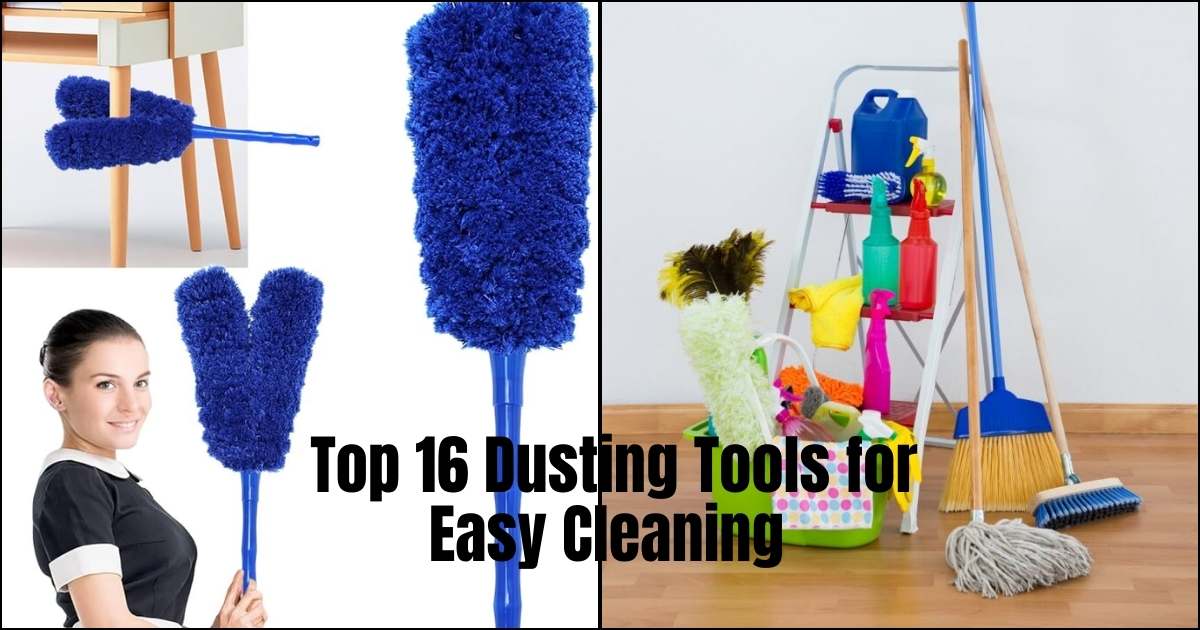
The Top 16 Dusting Tools – in detail (what, why, how)
1. Microfiber cloth – the everyday MVP
Why: Microfiber traps dust electrostatically and physically, picking up fine particles instead of spreading them.
Best use: Daily wipe-downs of counters, shelves, appliances, glass and stainless steel.
How to care: Wash on a gentle cycle without fabric softener (softener coats fibers). Use separate colors for kitchen and bathroom to avoid cross-contamination. Replace after 12–18 months of frequent use.
Utensil tip: Microfiber is safe for nonstick, copper, and polished wood – ideal when you want to preserve finishes.
2. Microfiber wand (static wand)
Why: Reaches ceiling fans, top shelves and chandeliers while trapping dust.
Best use: Fan blades, crown moulding, high light fixtures.
How to use: Move slowly across surfaces to let fibers capture dust; avoid fast sweeps that sling dust. Wash wand head after heavy jobs.
Ergonomics: Choose a lightweight telescopic pole to reduce arm strain.
3. Telescopic pole with interchangeable heads
Why: One pole, many jobs – attach microfiber head, brush, squeegee or lambswool.
Best use: High corners, fan blades, window sills, dusting cobwebs.
Buying tip: Invest in a sturdy aluminium or carbon fiber pole; cheap poles bend and make tasks harder.
4. Vacuum with dusting brush attachment + HEPA filter
Why: Suction removes dust and allergens rather than just moving them around. HEPA filters trap microscopic particles.
Best use: Curtains, upholstered furniture, mattresses, shelving with heavy dust.
Health benefit: For allergy sufferers, HEPA vacuums reduce settled and airborne allergen load substantially.
Maintenance: Clean/replace filters regularly and empty bins outdoors.
5. Robot vacuum with HEPA + side brushes
Why: Keeps floor dust from resettling on surfaces and reduces daily buildup.
Best use: Daily floor maintenance, under beds and sofas.
Limitations: Not a replacement for high-shelf dusting; pair it with manual tools.
Money tip: Lower models cut daily work; premium models save you more time.
6. Electrostatic duster (synthetic)
Why: Builds static charge that clings to dust-effective on blinds and baseboards.
Best use: Vertical surfaces, slats, radiators, baseboards.
Note: Avoid on sticky/oily surfaces (it may smear). Many heads are washable.
7. Lambswool duster (natural)
Why: Natural lanolin in wool picks up dust gently-great for antiques and brass.
Best use: Polished wood, heirloom décor, brass utensils on open shelves.
Care: Shake outdoors; brush and air dry occasionally.
8. Feather duster (ostrich)
Why: Reaches nooks and crannies with minimal weight.
Best use: Light decor and occasional touchups.
Caveat: Can aerosolize dust if used aggressively-follow with microfiber wipe.
9. Dust mop (flat microfiber)
Why: Picks up fine dust and hair from hard floors without pushing it around.
Best use: Laminate, tile, vinyl and stone floors.
Routine: Use daily in high-traffic kitchens; wash pads weekly.
10. Electrostatic dry mop
Why: Excellent for pet hair and fine dust, uses electrostatic attraction.
Best use: Floors and baseboards in pet households.
Maintenance: Pads may be replaceable or rechargeable.
11. Lint roller / adhesive roller
Why: Quick solution for lampshades, cushions and fabric lamps-removes hair and clinging dust.
Best use: Soft surfaces and quick touch-ups before guests arrive.
Cost: Consumable refills-keep one for entertaining.
12. Compressed air can / handheld blower
Why: Blasts dust from keyboards, vents and precise electronics areas.
Best use: Keyboards, cameras, PC heatsinks.
Safety: Use outdoors or in ventilated spaces and wear a mask if dust is heavy. Electric blowers are reusable and more eco-friendly long term.
13. Soft brush & small broom
Why: Gentle bristles for cobwebs, corners and behind appliances.
Best use: Corners, window frames, curtain tops.
Material note: Natural bristles are gentle on wood; synthetic are more durable.
14. Window squeegee with microfiber pad
Why: Covers wide surfaces quickly and removes settled dust on wide sills and blinds.
Best use: Wide window sills, horizontal blinds and large flat surfaces.
Care: Clean rubber blade periodically to avoid streaks.
15. Damp microfiber finishing cloth
Why: A barely damp microfiber cloth seals dust into the cloth and leaves a streak-free finish-ideal for wood and polished surfaces.
Best use: Final wipe after dry dusting, for solid wood, lacquered furniture, and stainless steel.
Caution: Avoid excess water on antique papers and electronics.
16. Handheld vacuum/blower with brush attachment
Why: Controlled suction in tight spots-combines the power of a vacuum with small tool access.
Best use: Vents, behind appliances, shelves and inside cabinets.
Maintenance: Empty dust cup and wash brush head regularly.
A practical dusting routine – simple, 20–30 minutes a day
Make dusting a habit rather than a chore. Here’s a routine that blends efficiency with respect for utensils and air quality.
Daily (10–15 minutes)
- Run the robot vacuum or quick floor sweep.
- Microfiber wipe of high-touch surfaces (tabletops, counters, stove hood).
- Quick lint roller over sofa cushions if pets shed.
Twice weekly (20–30 minutes)
- Microfiber wand on ceiling fans and top shelves.
- Electrostatic duster for blinds & baseboards.
- Microfiber damp finish on wood and stainless finishes.
Weekly (45–60 minutes)
- Vacuum curtains, mattresses and upholstery with HEPA attachment.
- Dust and inspect light fixtures and behind large appliances.
- Clean or replace filters in air purifiers and vacuums.
Monthly
- Deep clean vents and wash lambswool/feather head tools.
- Check and replace vacuum and purifier filters as needed.
Buying guide – which three tools to start with (value + impact)
- Microfiber cloth set (assorted sizes) – everyday workhorse; low cost per use.
- Telescopic pole + microfiber wand head – reaches high places safely; one investment replaces ladders.
- Vacuum with HEPA + dusting brush – reduces allergens and deep cleans upholstery.
These three cover most needs: surfaces, high spaces and deep extraction.
Utensil & material care – protect what you love
- Cast iron & seasoned surfaces: Use soft microfiber; avoid abrasive brushes that strip seasoning.
- Copper & brass: Wool or lambswool is gentle; avoid acidic cleaners for patina you want to keep.
- Nonstick & ceramic: Microfiber only; never metal scrapers.
- Wood & lacquer: Damp microfiber, then dry immediately; no vinegar or harsh soaps.
- Glass & stainless: Microfiber with a little distilled water; buff with a dry cloth for shine.
Eco & budget tips (money manager + homemaker)
- Choose washable microfiber and reusable pads – they cost more upfront but save money and waste.
- Replace compressed air cans with a small electric blower for repeat use.
- Repurpose an old cotton T-shirt as a dusting cloth in a pinch.
- Buy one good telescopic pole and multiple heads rather than several single-use tools.
Quick FAQs – practical answers from the kitchen front
Q: How often should I replace microfiber cloths?
A: With regular use and proper care, expect 12–18 months. When they stop trapping dust effectively, it’s time.
Q: Are feather dusters bad for my health?
A: They’re fine for light, occasional dusting on décor – but avoid as the only tool if anyone in the home has allergies because they can aerosolize particles.
Q: Can I use a vacuum on delicate items?
A: Use a soft dusting brush attachment and low suction; better yet, use lambswool or microfibre for fragile heirlooms.
Q: Will a robot vacuum replace manual dusting?
A: No – robots reduce floor dust but can’t reach high shelves, fans, light fixtures or delicate décor.
Final note – small rituals, big impact
Dust control is an act of care for the people who live in your home and for the things you use to nourish them. Simple, regular rituals – a daily microfiber wipe, a weekly fan blade pass, and a monthly vacuuming with HEPA protection – reduce allergens, protect utensils, save time and keep the kitchen a calm, nourishing place.
If you’d like a printable room-by-room dusting checklist, a shopping checklist for the three essential tools above, or a short 30-day dusting plan you can hang in the kitchen, I’ll draft them for Mana Vantillu.
Contact Us
For support, personalized advice, recommendations on tools or questions about this blog post, products and services:
Email: contact@manavantillu.com
Phone: +91 9490056002